
Hyper Software ne hamare business ko online ek nayi pehchan di. Website professional, fast aur SEO optimized hai. Website Design & Development ke liye best company.

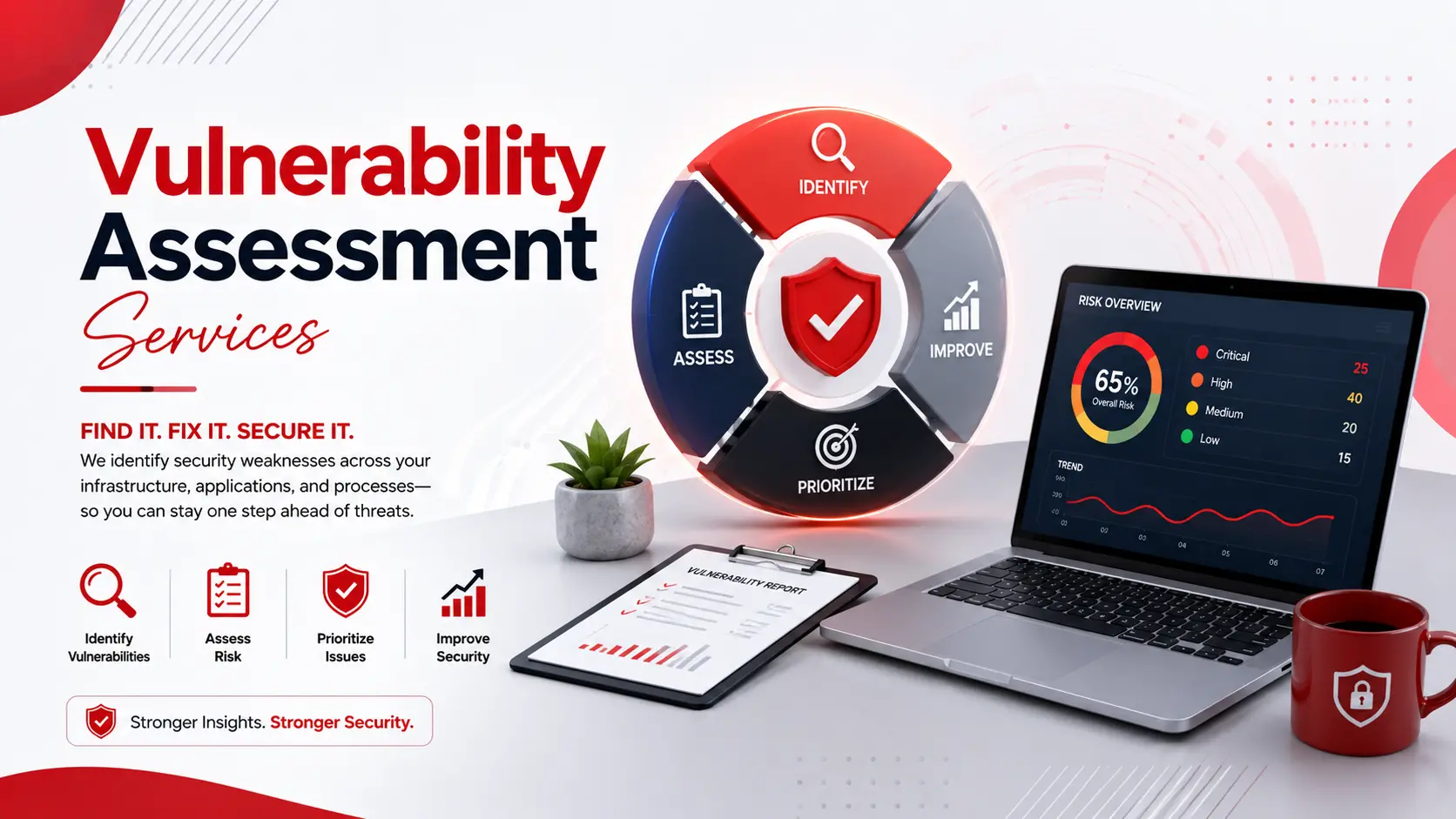
A vulnerability assessment is a structured security check that scans your network, applications, servers, and cloud systems for known weaknesses, then ranks them by risk so you know what to fix first. It's the starting point of almost every serious cyber risk assessment security program, and if you've never had one done, there's a good chance you don't actually know how exposed your business is.
At Hyper Software, we run vulnerability assessments for businesses across industries and time zones. We're based in Jaipur, Rajasthan, but our clients aren't. We work with teams in India, the US, the UK, the Middle East, and beyond, and we've built our process around one simple idea: find the real risks, explain them in plain language, and give you a fix list you can actually act on.
This page covers everything you need before you buy this service: what it is, what it costs, how long it takes, what's included, and whether you should do it yourself or hire a team like ours.
A vulnerability assessment is the process of scanning, identifying, and ranking security weaknesses across your IT environment, so you can fix the most dangerous ones first. Think of it as a full inspection of every door, window, and vent in a building. Most of them are fine. A few are unlocked. The assessment tells you exactly which ones, and how badly that matters.
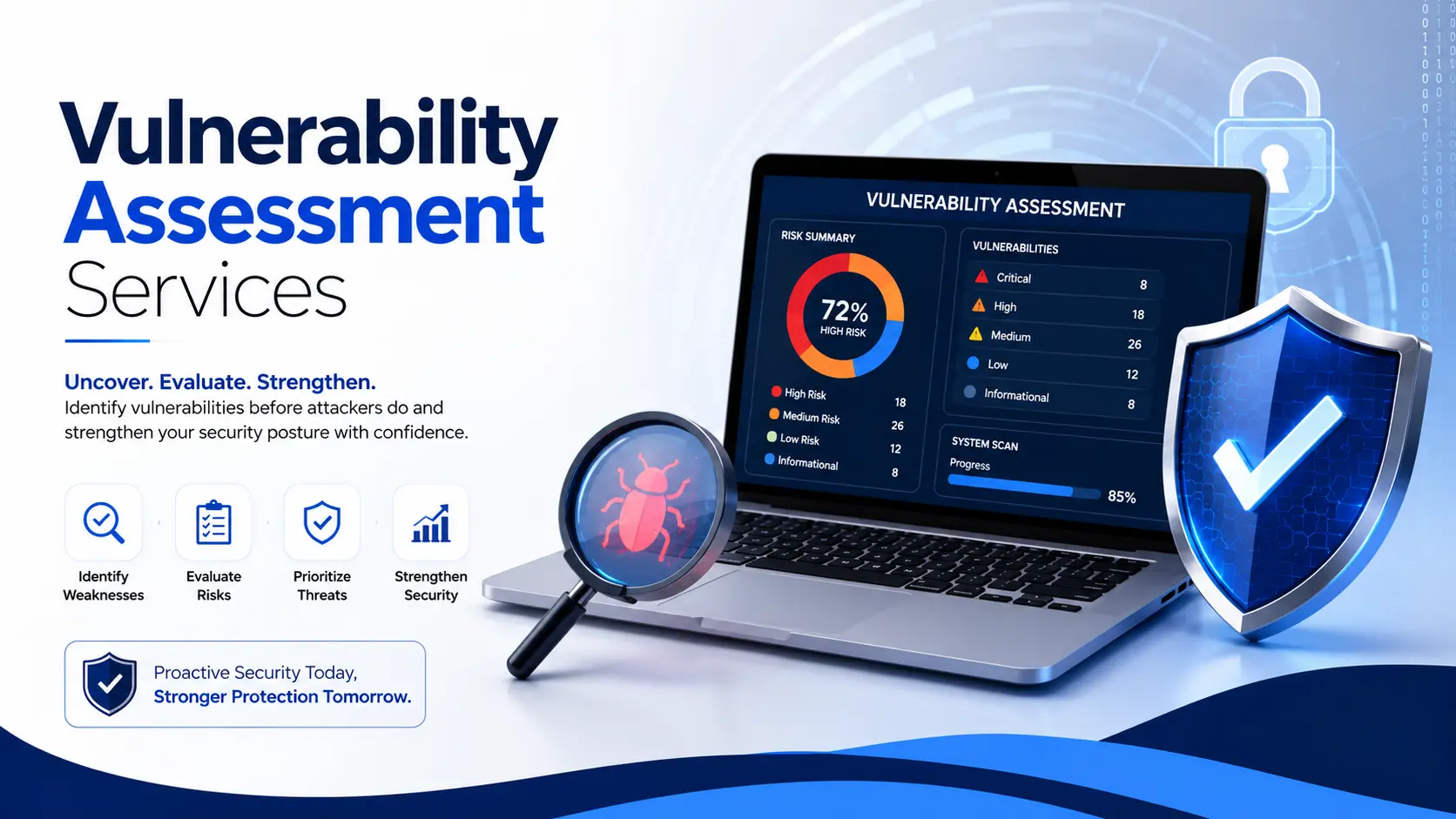
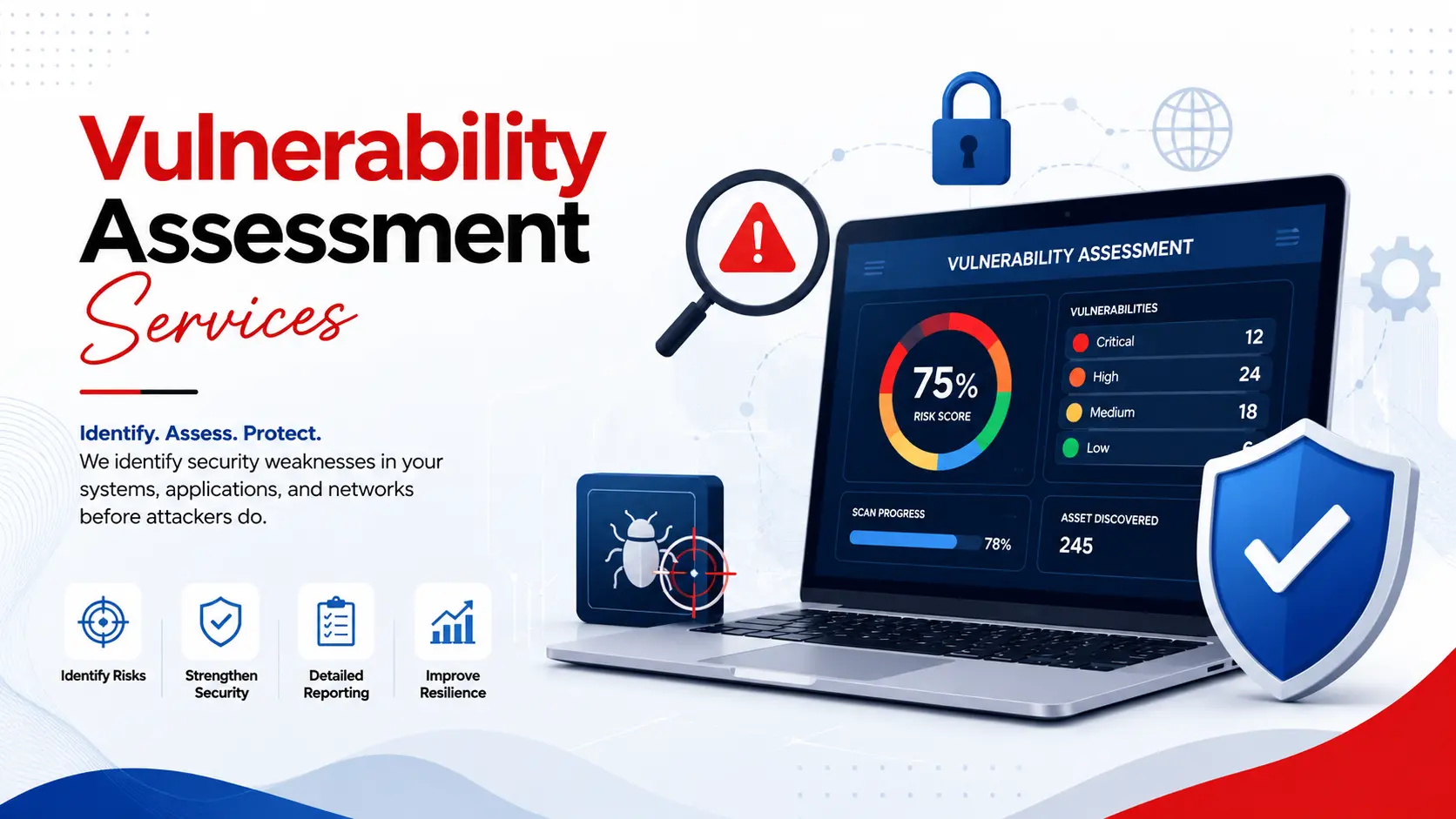
It's not guesswork. Analysts use automated scanners plus manual checks to build a full list of weaknesses in your network, apps, servers, and cloud accounts, then score each one using an industry-standard scale (more on CVSS below) so you're not left staring at 200 findings with no idea where to start.
Here's the part most guides skip: a vulnerability assessment on its own doesn't fix anything. It's a diagnosis, not a treatment. The value comes from what happens after, when someone actually patches, reconfigures, or removes the weak points the scan found.
Get Free Consultation Within Minutes
You don't need to run a bank to be a target. Attackers scan the entire internet looking for easy wins: outdated software, default passwords, exposed admin panels, and forgotten test servers. Small and mid-sized businesses get hit constantly, mostly because they assume they're too small to matter. They're not. Automated attack tools don't care about company size.
A handful of reasons this keeps coming up with our clients:
None of these reasons are dramatic. That's the point. Most businesses that get breached weren't targeted by genius hackers. They were running something outdated that nobody had gotten around to patching.
This is the question we get asked more than any other, so let's settle it clearly.
|
VulnerabilityAssessment |
Penetration Testing |
|
|
What it |
Scans and lists known weaknesses |
Actively tries to exploit weaknesses |
|
does |
||
|
Method |
Mostly automated tools, some manual |
Manual, human-led testing |
|
checks |
||
|
Goal |
Broad coverage, find as much as |
Deep coverage, prove real-world impact |
|
possible |
||
|
Time |
A few hours to a few days |
One to three weeks, sometimes longer |
|
needed |
||
|
Best for |
Routine checks, patch prioritization, compliance |
Proving whether an attacker could actually break in |
|
Frequency |
Monthly to quarterly |
Annually, or after major changes |
VAPT is simply the combination of both: a vulnerability assessment to find the full list of weaknesses, followed by penetration testing to confirm which ones are actually exploitable and how far an attacker could get. Most compliance frameworks (PCI DSS especially) expect both, at different intervals.
Our honest take: if you can only afford one and you're just starting out, run a vulnerability assessment first. It's faster, cheaper, and gives you a prioritized list you can act on immediately. Add penetration testing once you've closed the obvious gaps and want to know how a real attacker would actually get in.
Different parts of your business need different kinds of scanning. Here's what we cover, and what we're actually looking for in each.
Network Vulnerability Assessment
We scan routers, switches, firewall configuration, and every device on your network for open ports, outdated firmware, weak protocols, and misconfigurations that could let someone move around inside your network once they're in.
Web Application VulnerabilityAssessment
We test your website security audit or web app for issues from the OWASP Top 10: SQL injection, cross- site scripting, broken authentication, and insecure API endpoints. This matters most if your app handles logins, payments, or user data.
Cloud Vulnerability Assessment
ForAWS, Azure, or Google Cloud environments, we check for exposed storage buckets, over-permissive IAM roles, missing encryption, and publicly accessible admin consoles. Cloud misconfigurations are one of the fastest-growing causes of breaches, mostly because they're invisible until someone looks.
Database VulnerabilityAssessment
We review database configurations, user privileges, and access logs to catch things like excessive permissions, weak authentication, and unpatched database engines that could expose customer data.
API Vulnerability Assessment
As more businesses run on REST and GraphQL APIs, we test for broken object-level authorization, data over-exposure, and missing rate limits, the kind of flaws that don't show up in a standard network scan.
Wireless Network Assessment
For offices with Wi-Fi, we check for weak encryption, poor network segmentation, and guest networks that can reach internal systems they shouldn't.
Mobile Application Assessment
For iOS and Android apps, we check for insecure data storage, weak API communication, and hardcoded credentials inside the app itself. You don't need all seven types on day one. We'll tell you honestly which ones matter most for your setup after a short scoping call.
Hyper Software ne hamare business ko online ek nayi pehchan di. Website professional, fast aur SEO optimized hai. Website Design & Development ke liye best company.

Here's exactly what happens when you work with us, step by step.
Step 1: Scoping and Planning
We agree on what's in scope (which systems, apps, IP ranges), what's off-limits, and when testing will happen. This protects you from any surprise downtime during business hours.
Step 2: Asset Discovery
Before scanning, we map everything you actually have: servers, subdomains, cloud accounts, APIs, and forgotten test environments. This step alone surprises a lot of clients. Most companies have more exposed assets than they realize, including old staging sites nobody remembers is still live.
Step 3: Scanning
We run automated tools against every asset in scope, using industry-standard scanners for network, web, and cloud layers.
Step 4: Manual Verification
This is the step a lot of cheaper providers skip. Automated scanners produce false positives, sometimes a lot of them. We manually verify the serious findings so your team isn't wasting time chasing issues that don't actually exist.
Step 5: Risk Prioritization
Every confirmed vulnerability gets a severity score using CVSS (Common Vulnerability Scoring System), rated from 0 to 10. We then layer on business context: a medium-severity issue on your payment gateway matters more than a critical one on a system nobody uses.
Step 6: Reporting
You get a report with an executive summary for leadership, a technical breakdown for your IT team, and a prioritized fix list. No 80-page dump of raw scanner output with no explanation.
Step 7: Remediation Support and Retesting
We stay available while your team fixes the issues, and we retest afterward to confirm the fixes actually worked. A vulnerability assessment without retesting is only half the job.
We don't chase every new scanner on the market. We use a proven combination of tools, matched to what's being tested:
We score every finding against CVSS, the same standard referenced by NIST, PCI DSS, and ISO 27001, so your results line up with what auditors and compliance teams expect to see. Where relevant, we also map findings to the OWASP Top 10 for web applications and the CISA Known Exploited Vulnerabilities catalog for anything actively being used in real attacks right now.
Pricing depends on scope, not guesswork. Here's a realistic range based on what we typically see across the industry:
|
Scope |
Approx. Cost (India) |
Approx. Cost (Global) |
|
Single website or small web app |
₹15,000 – ₹35,000 |
$250 – $700 |
|
Small business network (under 20 devices) |
₹25,000 – ₹60,000 |
$500 – $1,500 |
|
Mid-size business (network + web + cloud) |
₹60,000 – ₹1,50,000 |
$1,500 – $3,500 |
|
Enterprise, multi-asset, compliance-driven |
₹1,50,000 – ₹5,00,000+ |
$3,500 – $10,000+ |
Four things move the price up or down:
1. Scope — how many IPs, domains, and cloud accounts are in play.
2. Depth — automated-only scanning costs less than automated plus manual verification.
3. Compliance requirements — audits for PCI DSS or ISO 27001 often need more documentation and formal reporting.
4. Frequency — a one-time assessment costs more per engagement than a quarterly retainer.
If a quote you're getting seems unusually cheap, ask whether it includes manual verification. A pure automated scan with no human review over-reports issues that don't actually matter and misses ones that do.
There's no single right answer, but here's a practical guide based on risk level:
| Business Type | Recommended Frequency |
| Small business, low online exposure | Every 6 months |
| Growing business with a customer-facing app | Quarterly |
| E-commerce, fintech, healthcare | Monthly |
| High-risk or regulated industries (banking, defense, critical infrastructure) | Continuous or weekly |
Beyond the calendar, run one immediately after: a major infrastructure change, a new product launch, a merger or acquisition, or a security incident anywhere in your industry that makes you nervous. Waiting for the next scheduled scan after a big change is one of the most common gaps we see.
Plenty of free and low-cost scanning tools exist. Should you just run one yourself?
|
Doing It Yourself |
Hiring an Agency |
|
|
Cost |
Low or free tool cost, high time cost |
Fixed cost, no internal time drain |
|
Accuracy |
High false-positive rate without |
Manual verification cuts false positives |
|
expertise to interpret results |
significantly |
|
|
Compliance |
Rarely accepted for audits (needs |
Meets third-party independence |
|
value |
independence) |
requirements for ISO 27001, PCI DSS |
|
Depth |
Usually network-only, misses app/API/cloud nuance |
Covers all layers with the right specialist tools |
|
Best for |
Internal awareness checks between |
Anything client-facing, compliance- |
|
formal assessments |
driven, or high-stakes |
Our honest advice: DIY scanning is fine as a stopgap between formal assessments, especially for internal awareness. But if a client, auditor, or insurer is asking for proof, theyalmost always want an independent third party involved. Self-run scans don't carry the same weight, and for good reason: nobody grades their own homework well.
If you're being asked for a vulnerability assessment because of a compliance requirement, here's where it fits:
A vulnerability assessment is a systematic scan of your network, applications, and systems to find, classify, and rank known security weaknesses. It gives you a clear picture of where you're exposed, without attempting to exploit anything.
A vulnerability assessment finds and lists weaknesses using mostly automated tools. A penetration test actively tries to exploit those weaknesses to prove how far an attacker could actually get. Most businesses need both, at different points in the year.
Most assessments take between 3 and 7 business days, depending on how many systems, applications, and cloud accounts are in scope. A single website scan can be much faster; a full enterprise environment takes longer.
Costs typically range from ₹15,000 to ₹5,00,000+ in India ($250 to $10,000+ globally), based on scope, depth, and compliance requirements. Get a tailored quote after a short scoping call.
Quarterly is the common baseline for most businesses. High-risk industries like finance and healthcare often need monthly or continuous scanning, while low-exposure small businesses can sometimes go every six months.
A well-scoped assessment shouldn't cause downtime. We schedule scans outside peak business hours where needed and agree on scope in advance so nothing gets tested that could affect live customers.
Yes. ISO 27001's technical vulnerability management controls expect regular, documented assessments as part of your risk management process, with CVSS-based scoring commonly used as evidence.
Yes. PCI DSS v4.0 requires vulnerability remediation for anything scoring 7.0 or higher on CVSS, along with quarterly scans for systems that handle card data.
Common tools include Nessus, Nmap, OpenVAS, and Burp Suite, depending on whether the target is a network, a web application, or a cloud environment. The right tool depends on what's being tested, not the other way around.
You can, using free or low-cost scanning tools, but self-run scans usually carry a high false-positive rate and aren't accepted as independent evidence for most compliance audits. They work well as a stopgap between formal third-party assessments.
Common Vulnerabilities We Find
Across hundreds of assessments, the same issues show up again and again:
None of these are exotic. That's what makes them dangerous. Attackers don't need a zero-day exploit when a five-year-old unpatched plugin will do the job.
A few patterns we see often enough to call out directly:
A mid-sized e-commerce client came to us after a payment processor asked for proof of regular security monitoring testing before renewing their merchant account. They'd never had a formal assessment done and weren't sure what to expect.
We started with asset discovery and found something they hadn't accounted for: an old staging version of their checkout page, still live, still connected to a copy of their customer database, and completely unpatched for over a year. It wasn't flagged anywhere in their internal documentation. Nobody remembered it existed.
We scored it as critical, along with two medium-severity issues on their main site (an outdated plugin and a missing rate limit on their login endpoint). Within eight business days of the report going out, their team had patched all three, and we retested to confirm the fixes held. Their payment processor accepted the report, the merchant account renewed on schedule, and they moved to a quarterly assessment cadence with us going forward.
Nothing dramatic happened here. No dramatic hack, no headline. Just a quiet fix, done before it became a problem. That's usually what good security work looks like.
We've been building websites, software, and digital infrastructure for businesses since 2020, which means we understand how the systems we're testing actually get built in the first place. That matters more than it sounds. A security team that only tests but never builds tends to hand you a list of problems with no real sense of how hard (or easy) each fix actually is.
What you get working with us:
Every report we deliver includes:
CVSS (Common Vulnerability Scoring System) is the industry-standard scale, from 0 to 10, used to rate how severe a vulnerability is. It's referenced by PCI DSS, ISO 27001, and NIST, so it keeps your results consistent with what auditors expect.
You get a report with a prioritized fix list. Your team (or ours, with support) applies the fixes, and then a retest confirms the vulnerabilities are actually closed, not just patched on paper.
A vulnerability assessment is a single scan and report. Vulnerability management is the ongoing cycle of scanning, prioritizing, fixing, and rescanning, on a recurring schedule. The assessment is one step inside the larger management process.
Finance, healthcare, e- commerce, and SaaS businesses face the strictest requirements, since they handle sensitive data and are often bound by PCI DSS, HIPAA, or SOC 2. That said, any business with a website or customer data benefits from regular assessments.
Yes. We work with clients globally and deliver assessments remotely, with reports and consultations available over call, email, and video, regardless of time zone.
Have questions or need expert guidance? Our team is ready to help you with the right technology solutions for your business.