
Hyper Software ne hamare business ko online ek nayi pehchan di. Website professional, fast aur SEO optimized hai. Website Design & Development ke liye best company.

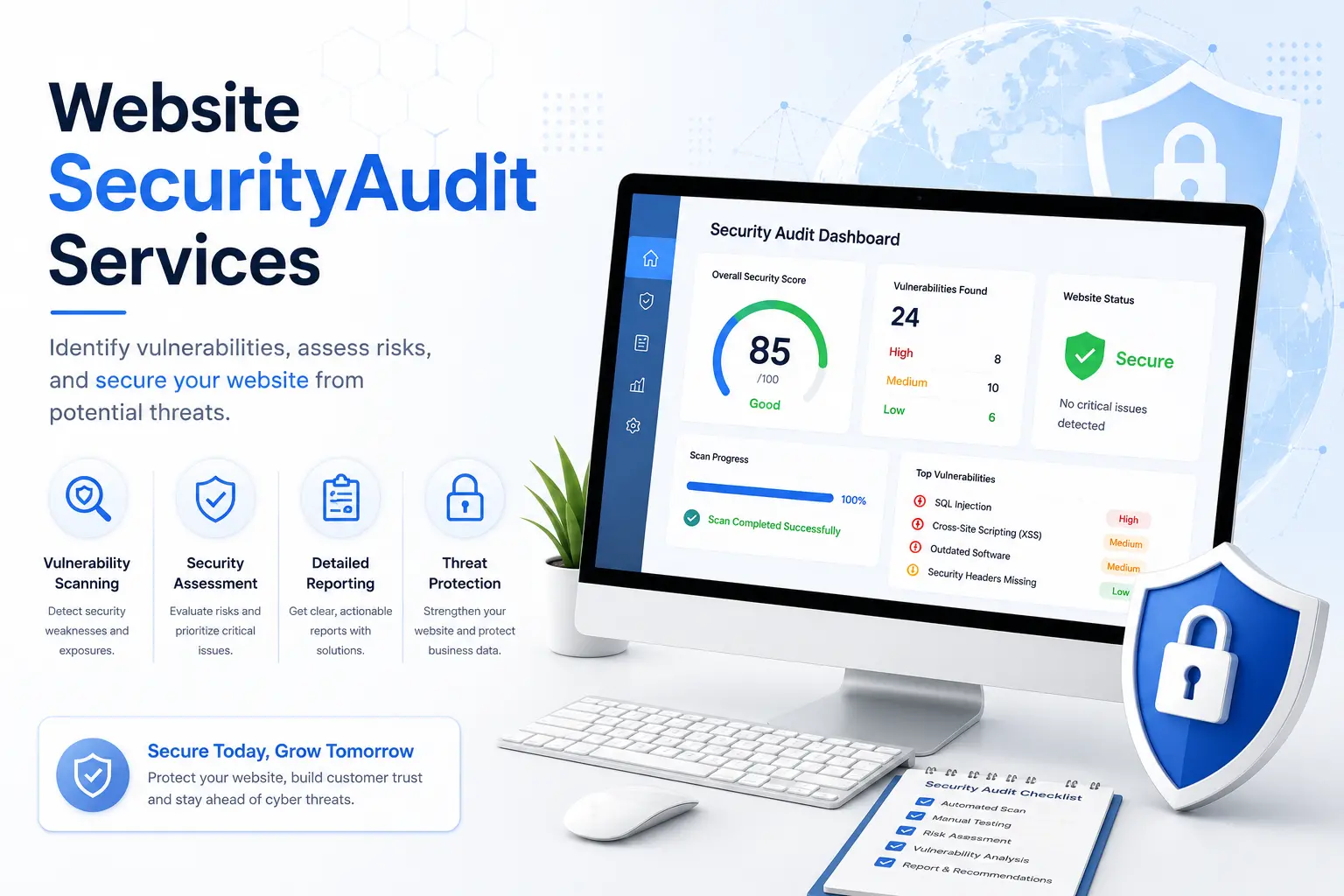
Your website gets attacked more often than you think. Automated bots scan the internet around the clock, looking for outdated plugins, weak passwords, and unpatched code. A website security audit is how you find those weak points before someone else does. It's a full check of your website's code, server, plugins, and settings, and it ends with a clear report telling you exactly what to fix and how.
At Hyper Software, we run website security audits for businesses across India and worldwide, from small WordPress sites to custom-built platforms handling live customer payments. Here's everything you need to know before you book one.
A website security audit is a structured review of your website's security posture. An auditor examines your content management system, your hosting server, your third-party plugins and integrations, and your code for weaknesses that could let an attacker steal data, deface your site, or take it offline.
Think of it like a home inspection, but for your website. An inspector doesn't just glance at the front door. They check the windows, the wiring, the foundation, and the roof. A proper audit does the same thing to your website: it checks the login page, the database, the server configuration, and the code your developers wrote.
Most audits look for the risks defined in the OWASP Testing Guide Top 10, the industry-standard list maintained by the Open Web Application Security Project. That includes broken access control, SQL injection, cross-site scripting (XSS), security misconfiguration, and the use of components with known vulnerabilities. A serious IBM breach study found that 40% of data breaches involve data stored in public cloud environments, and those breaches carry the highest average cost of any breach type. That's exactly the kind of exposure a good audit is built to catch.
Get Free Consultation Within Minutes
Here's the honest answer: because "it hasn't happened yet" isn't the same as "it won't happen." Most business owners only think about website security after something goes wrong, a defaced homepage, a Google blacklist warning, or an angry customer email about a fake login page.
A few real reasons audits matter:
A rhetorical question worth sitting with: if a hacker got into your website tomorrow, would you even know?
Sometimes a hack is loud. Most of the time, it isn't. Watch for:
If even one of these sounds familiar, don't wait for the audit to schedule itself. Get it done this week, not next month.
Our audits are built around the OWASP Top 10, then extended based on your specific platform and business. A typical Hyper Software audit checks:
Access & Authentication
Application & Code
Server & Infrastructure
CMS & Plugins
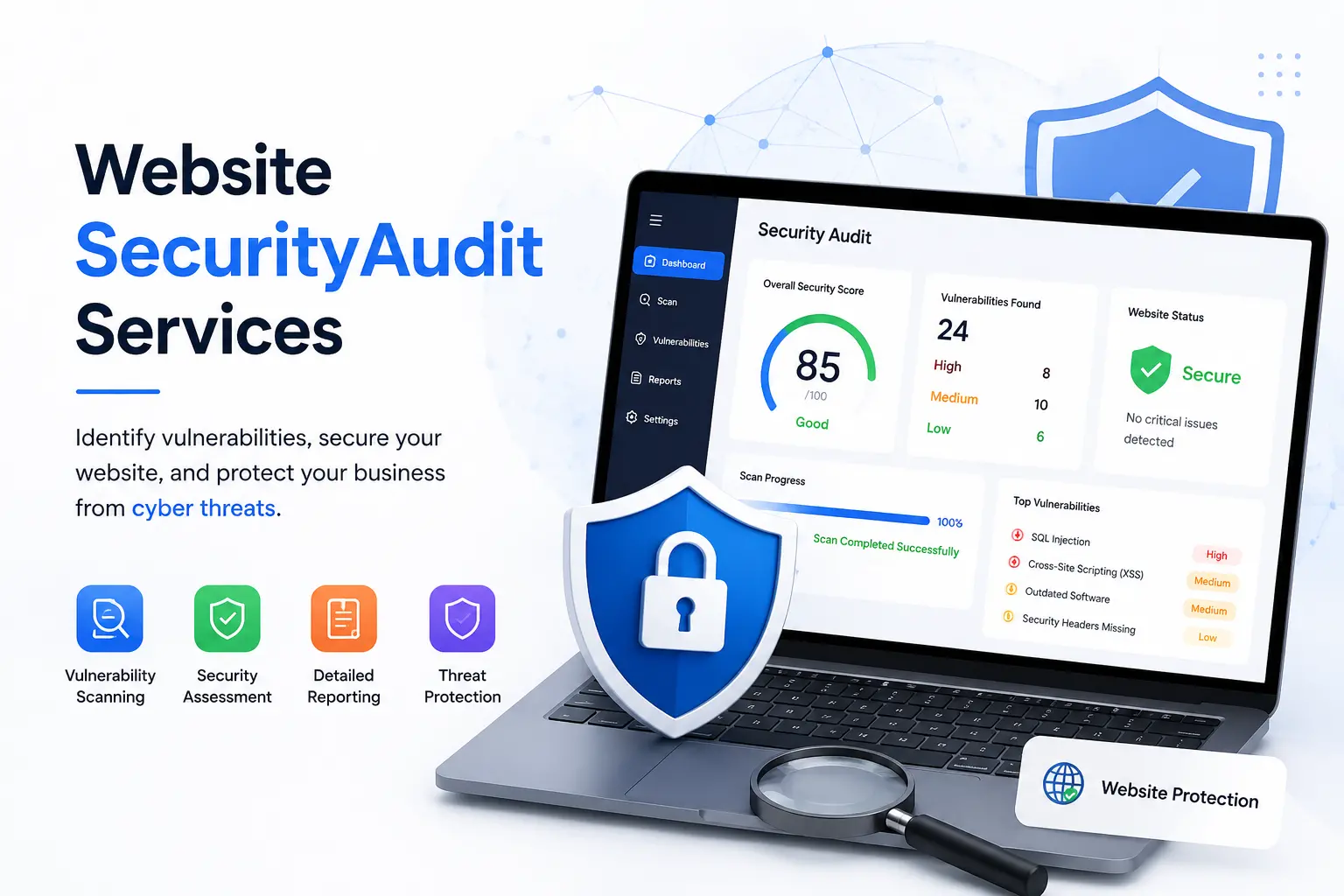
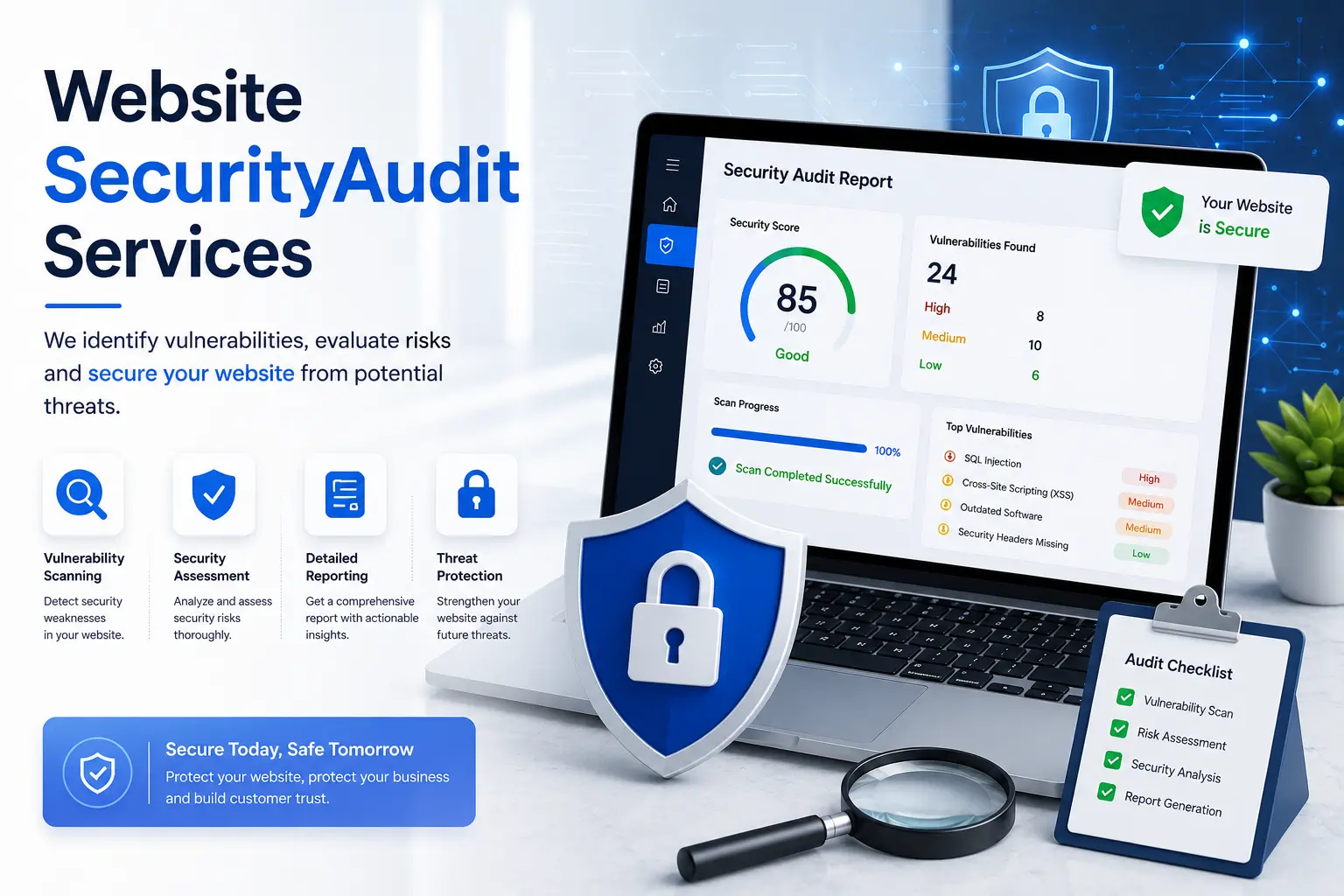
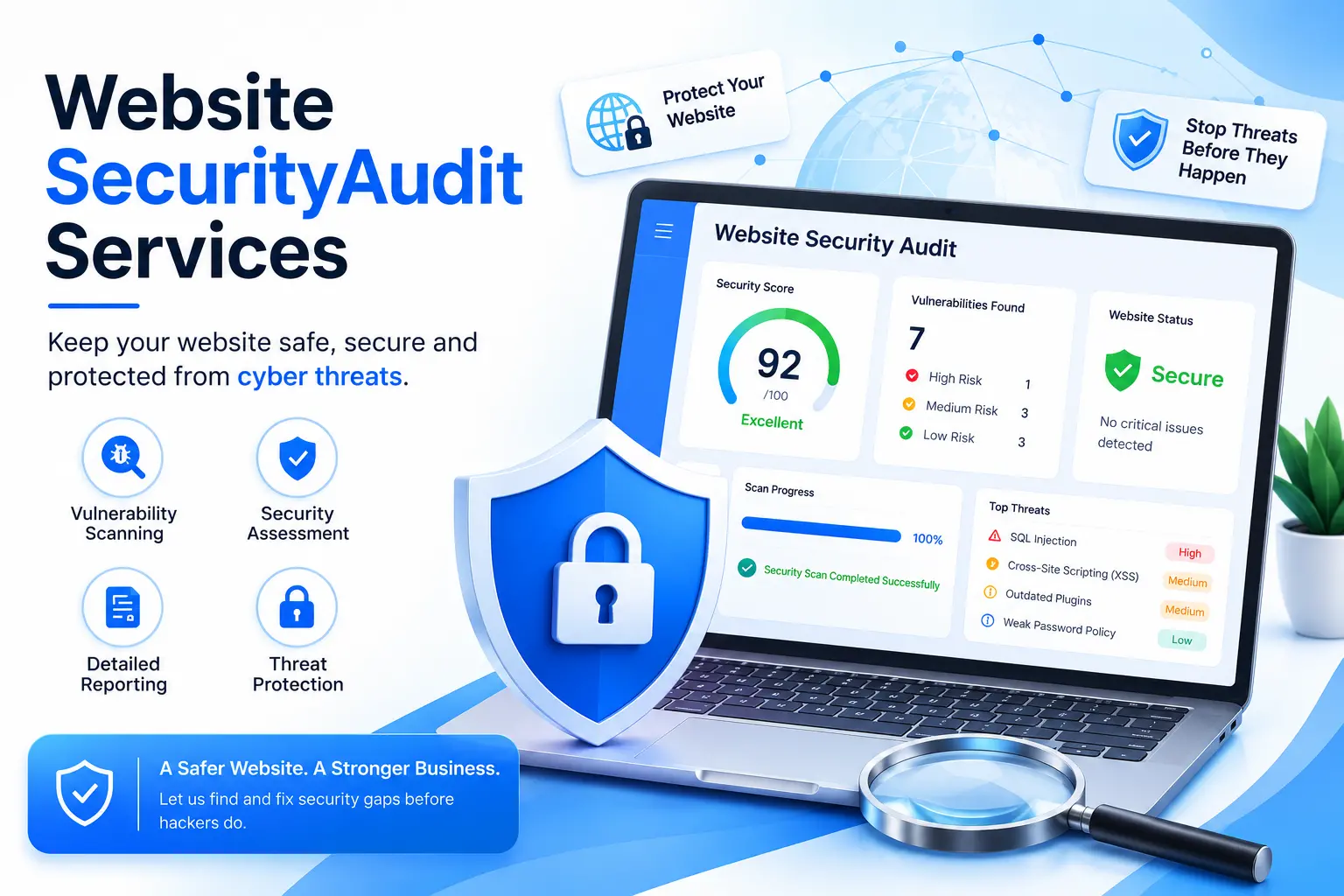
Every finding in the final report is ranked by severity (critical, high, medium, low) with a plain-English explanation of the risk and the exact fix.
Hyper Software ne hamare business ko online ek nayi pehchan di. Website professional, fast aur SEO optimized hai. Website Design & Development ke liye best company.

We keep the process simple because you shouldn't need a cybersecurity degree to understand your own report.
Most audits take 2 to 10 business days, depending on the size and complexity of your site.
Not every site needs the same depth of testing. Here's how the main options compare:
| Type | Best For | What It Includes | Typical Turnaround |
|---|---|---|---|
| Basic vulnerability scan | Small brochure sites, blogs | Automated scan only, known vulnerabilities | 1–2 days |
| Comprehensive security audit | Business sites, eCommerce stores | Automated scan + manual testing + full report | 3–10 days |
| Penetration testing | Sites handling payments, sensitive data, or compliance needs | Everything above, plus ethical hackers actively attempting to break in | 5–15 days |
A quick distinction that trips a lot of people up: an audit identifies vulnerabilities that could be exploited. A penetration test proves which ones actually can be, by trying to break in the way a real attacker would. Audits are less expensive and good for ongoing monitoring. Penetration tests cost more but give you proof, which matters if a client or investor is asking for it.
A mid-sized furniture eCommerce brand came to us after their WooCommerce store started redirecting visitors to a gambling website. They'd noticed it because a customer complained on Instagram, not because they'd caught it themselves.
We ran an emergency audit and found the real problem within hours: an outdated plugin with a known vulnerability that had been sitting unpatched for over a year, plus an old FTP account with a password that had never been changed since the site launched. The attacker had used that account to plant a redirect script buried inside a theme file, the kind of thing a surface-level scan never finds.
We removed the malicious code, patched the plugin, rotated every credential on the site, and set up a web application firewall to block the same attack pattern going forward. Within 48 hours, the redirects stopped and their Search Console malware removal warning cleared within the week. We now run a security check on their store every quarter, so this doesn't happen again.
That's the pattern we see most often: it's rarely one big mistake. It's a small, boring oversight, like a forgotten account or an unpatched plugin, that eventually costs a business its customers' trust.
Cost is usually the first question, so let's be direct about it.
In India, a professional website security audit typically costs between ₹35,000 and ₹1,50,000, depending on scope. Globally, the equivalent range runs from roughly $500 to $20,000. The gap is wide because "audit" means different things to different providers.
What changes the price:
A basic automated scanning subscription can run ₹15,000–₹35,000 per month in India (₹1,00,000–₹2,00,000 annually), while a one-time comprehensive audit with manual testing sits closer to the ₹35,000–₹1,50,000 range mentioned above. We'll always give you a fixed quote after the scoping call, not a vague "it depends" with no number attached.
You can absolutely start with a DIY check. Whether that's enough depends on what your site does.
When DIY makes sense:
What DIY tools typically miss:
When to hire a professional agency:
What can go wrong doing it alone: free scanners produce false positives and false negatives in roughly equal measure. We've seen businesses spend weeks chasing a "critical" issue that wasn't exploitable, while a real vulnerability sat untouched in a section the scanner never reached. A blended approach works best for most businesses: use free tools for monthly self-checks, and bring in a professional audit twice a year or before anything high-stakes, a product launch, a funding round, a compliance deadline.
Before you book a full audit, run these checks yourself. They take under an hour and catch the most common issues:
After years of running these audits, the same handful of mistakes show up again and again:
If your business needs to prove its security posture to a client, investor, or regulator, our audits map to the frameworks that matter:
We'll tell you plainly if your business actually needs a given standard, or if it's overkill for your size. Not every five-page website maintenance needs an ISO 27001-aligned audit, and we're not going to sell you one you don't need.
A website security audit is a full review of your website's code, server, and settings to find security weaknesses before hackers do. It ends with a report ranking each risk and how to fix it.
A professional website security audit in India typically costs between ₹35,000 and ₹1,50,000, depending on the size of your site, the depth of testing, and whether penetration testing is included.
Most audits take 2 to 15 business days. A basic automated scan can finish in a day or two, while a comprehensive audit with manual testing and penetration testing takes longer.
An audit identifies vulnerabilities that could be exploited. A penetration test actively attempts to exploit them, the way a real attacker would, to prove which risks are genuinely dangerous.
At minimum, twice a year. You should also run one immediately after a major redesign, a new plugin rollout, or if you notice anything unusual on your site.
You can run a basic self-check using free tools like malware scanners and header checkers. But free tools generally miss business-logic flaws and chained vulnerabilities that only manual testing catches.
Common signs include browser warnings, unexplained traffic spikes or drops, new pages or admin accounts you didn't create, Google Search Console malware alerts, and strange redirects.
No. SSL/TLS only encrypts data in transit between the browser and your server. It doesn't protect against outdated plugins, weak passwords, or vulnerable code.
WordPress itself isn't inherently less secure, but it's the most-targeted CMS simply because it powers such a large share of the web. Most WordPress hacks come from outdated plugins and themes, not the core software.
The OWASP Top 10 is an industry-standard list, maintained by the Open Web Application Security Project, of the most critical web application security risks, including broken access control, SQL injection, and security misconfiguration.
Hyper Software has been building and securing websites since 2020, based out of Jaipur, Rajasthan, and working with clients across India and internationally. Security audits aren't a side offering for us, they come out of the same team that builds custom software, eCommerce platforms, and CRM/ERP systems, so we understand how these systems are actually built, not just how to run a scanner against them.
Ready to find out where your website actually stands? Get in touch with our team for a free scoping call, no pressure, no jargon.
Yes. Small business sites are frequent targets precisely because they're less protected. A hacked small business site can lose search rankings, customer trust, and revenue just as fast as a large one.
You receive a report with every finding ranked by severity, along with a specific fix for each one. Many providers, including Hyper Software, can also implement the fixes and re-test afterward.
Yes, and they should. eCommerce sites need extra attention on payment forms, checkout logic, and PCI- DSS relevant controls, since they handle sensitive customer and card data.
A good report lists every vulnerability found, its severity (critical, high, medium, low), a plain-English explanation of the risk, and a specific recommended fix, not just a generic warning.
No audit can guarantee zero future risk, since new vulnerabilities are discovered constantly. Regular audits, combined with prompt patching and monitoring, dramatically reduce the chance of a successful attack.
Have questions or need expert guidance? Our team is ready to help you with the right technology solutions for your business.