Business website bilkul premium quality ki bani hai. Mobile responsive design aur clean layout ki wajah se customer experience bahut achha ho gaya. Highly recommended.

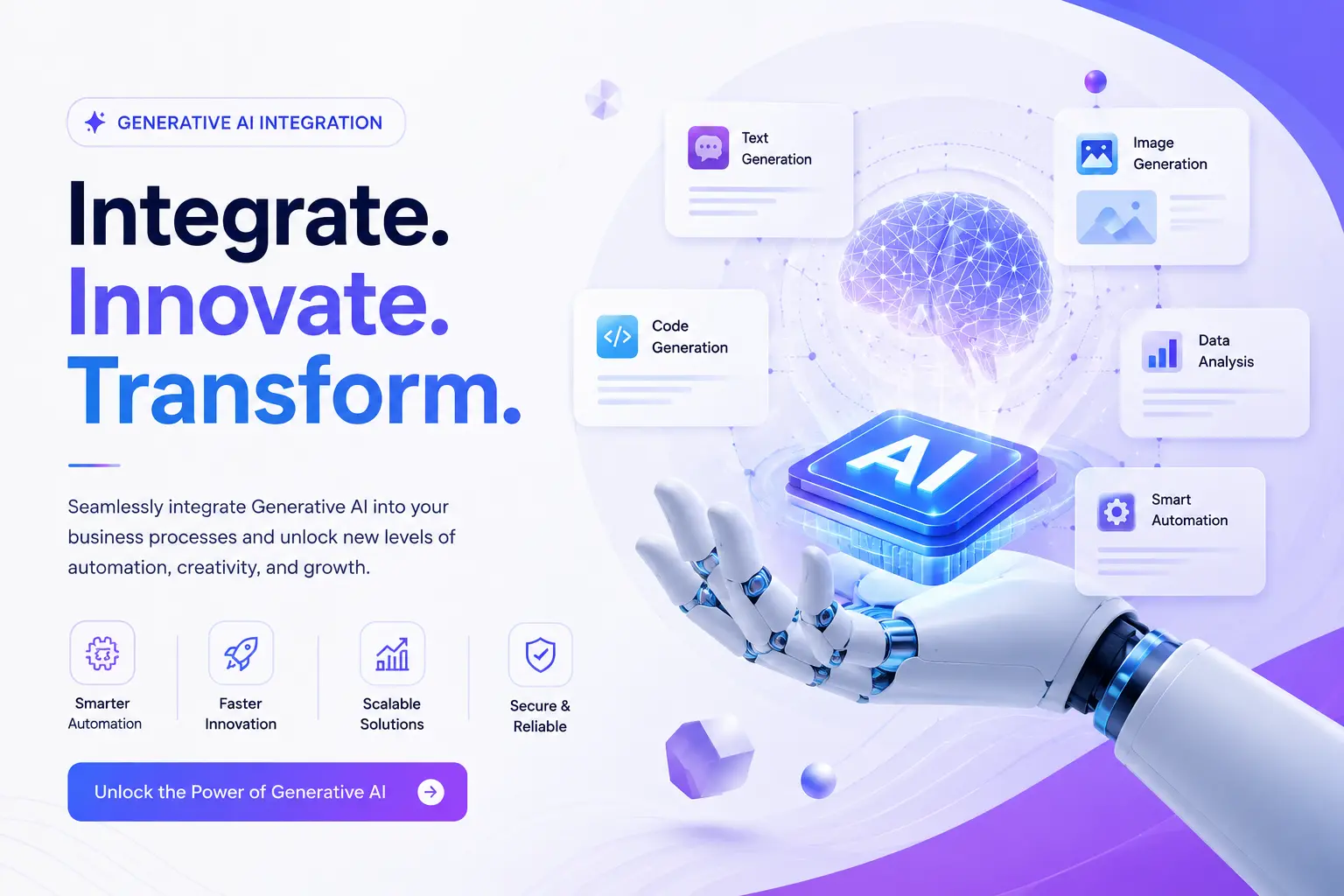
Generative AI integration means connecting AI models like GPT, Anthropic Claude, or Gemini directly into the tools you already run your business on, your website, your CRM, your support desk, so the AI can actually read your data and get real work done. It's not the same as giving your team a ChatGPT login. At Hyper Software, we build integrations that plug into your existing systems, not around them.
If you've been putting off AI because every provider sounds the same, this page walks through what it actually costs, how the process works, and where most projects go wrong, in plain language.
Generative AI integration is the technical process of embedding a generative AI model into your existing business software so it can generate text, answer questions, or automate tasks using your own data, not generic internet knowledge.
Think of it this way: ChatGPT integration on its own doesn't know your product catalog, your support ticket history, or your pricing rules. Integration is what connects the AI to that information, usually through an API development and something called Retrieval-Augmented Generation (RAG), so its answers are grounded in facts your business actually owns.
A few things it typically involves:
Get Free Consultation Within Minutes
Businesses aren't asking "should we use AI" anymore. They're asking how to do it without breaking what already works. That shift matters because a badly integrated AI tool creates more cleanup work than it saves.
Done right, generative AI integration gives you:
Faster response times. Support teams answer common questions in seconds instead of minutes, because the AI drafts (or fully handles) the first response using your actual policy documents.
Lower operating cost. Repetitive work, ticket sorting, first-draft content, data summarizing, gets automated so your team spends time on the decisions that need a
human.
Better customer experience. Personalized responses based on real order history and account data, not a script.
A head start on competitors. Early, well-executed AI adopters are already pulling ahead on cost and speed. Waiting a year costs more than the integration itself.
That said, none of this happens by installing a plugin. It happens through proper integration work, and that's the part most businesses underestimate.
We don't sell one-size-fits-all AI. Here's what we actually build, depending on where you're tarting from.
AI chatbot development & Virtual Assistant Integration
We connect conversational AI to your website, WhatsApp, or app, trained on your actual FAQs, product data, and support history, so it gives correct answers instead of generic ones.
RAG (Retrieval-Augmented Generation) Implementation
This is how we connect an AI model to your private documents, databases, or knowledge base securely, so answers come from your business, not the open internet. Most serious AI projects need this at some point.
CRM & ERP Generative AIIntegration
We plug AI directly into platforms like Salesforce, Zoho, HubSpot, or your custom ERP, so it can draft follow-up emails, summarize customer interactions, or flag deals that need attention, right where your team already works.
Custom AI Workflow Automation
We map your repetitive processes, invoice checks, lead qualification, report generation, and build an AI-driven workflow that removes the manual steps without replacing your existing tools.
AI content automation & Document Generation
From marketing copy drafts to automated report generation and document summarization, we set up systems that produce a strong first draft your team edits and approves, not unreviewed AI output going straight out the door.
Custom LLM Fine-Tuning
For businesses with very specific terminology (legal, medical, technical), we fine-tune a model on your own data so it understands your industry, not just general English.
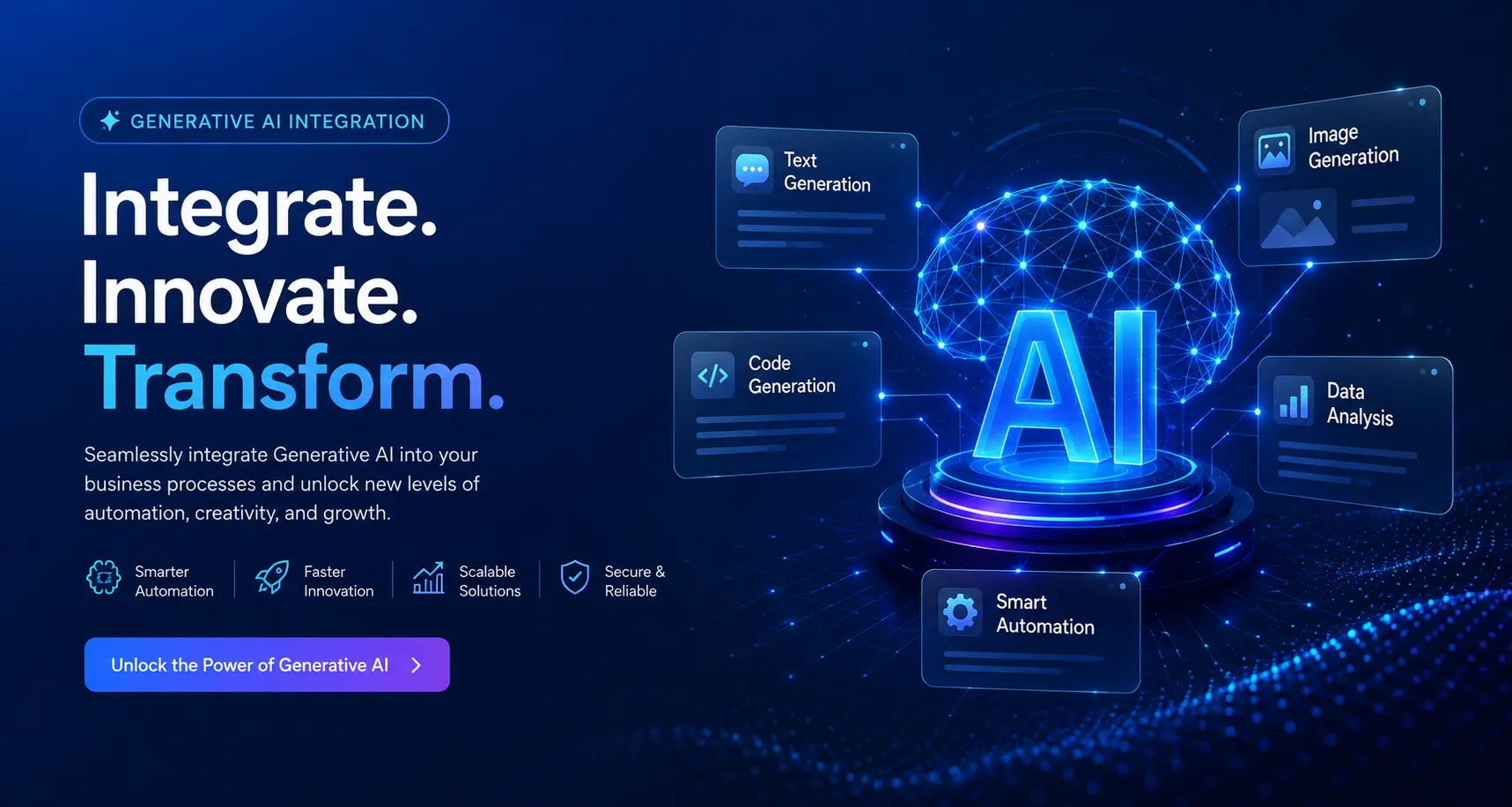
We follow a clear, phased process. No black box, no guessing what happens between "kickoff call" and "invoice."
1. Discovery & Audit — We look at your current systems, data quality, and the exact business problem you're trying to solve. Not every problem needs AI. We'll tell you if it doesn't.
2. Use Case Scoping — We pick one clear, high-value workflow to start with instead of trying to automate everything at once. This keeps cost predictable and shows results fast.
3. Architecture & Model Selection — We choose the right model (GPT, Claude, Gemini, or an OpenAI API-source option like Llama) and design how it connects to your systems, based on your budget, data sensitivity, and performance needs.
4. Build & Integrate — We build the API connections, RAG pipeline, and automation logic, and test it against real data before anyone outside the project sees it.
5. Human Review & Guardrails — EveryAI integration we ship includes a review layer. The AI drafts, a person or a rule-based check approves, especially for anything customer-facing.
6. Launch & Monitor — We deploy in stages, monitor real performance, and fix issues before they scale. Then we hand over documentation so your team isn't dependent on us for every small change.
This is the question almost everyone asks before they pick up the phone, so let's answer it honestly.
|
Factor |
Doing It Yourself |
Hiring an Agency (like Hyper Software) |
|
Best for |
A single ChatGPT-style tool with no private data involved |
Anything touching customer data, multiple systems, or compliance |
|
needs |
||
|
Typical cost |
₹0–₹50,000 (subscription tools only) |
₹1.5 lakh–₹1 crore+, depending on scope |
|
Time to launch |
Days, for a simple setup |
2–12 weeks, depending on complexity |
|
Data security |
You're on your own for compliance and |
Built-in guardrails, access control, |
|
access control |
and review layers |
|
|
What usually |
AI given access to real customer data with no |
Rare, when scoped properly, |
|
goes wrong |
review step; hallucinated answers going live unchecked |
because ofthe review and testing phase |
|
Long-term |
Often higher, from rework after a failed DIY |
Predictable, phased, budgeted |
|
cost |
attempt |
upfront |
If you're a solo founder testing an idea with no customer data involved, DIY tools are a fine starting point. The moment AI touches real customer information, a live CRM, or a workflow customers depend on, that's when a proper integration partner earns its cost back, usually within the first few months, by avoiding the rework a DIY attempt tends to create.
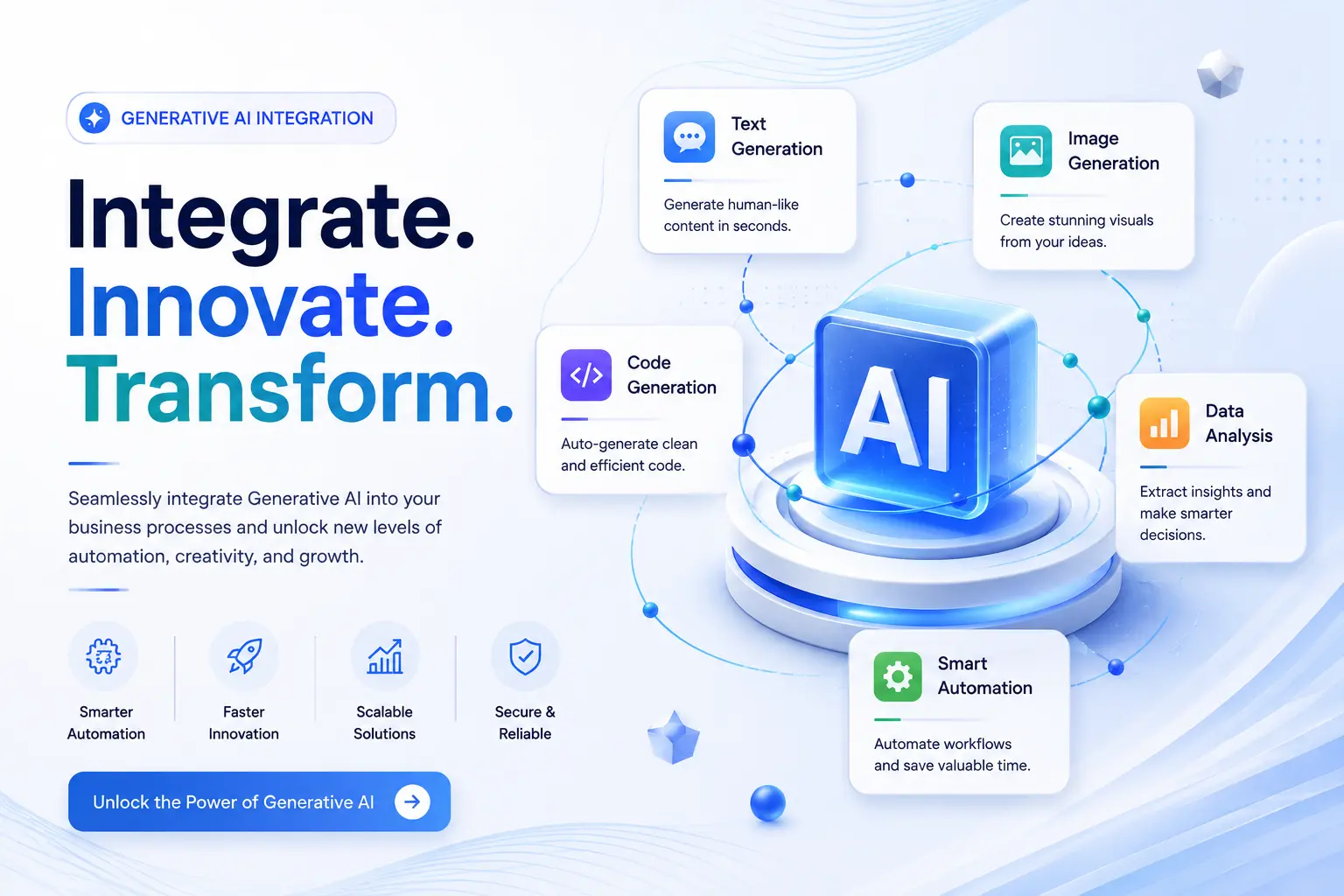
Costs vary a lot depending on scope, so treat these as realistic starting ranges, not a fixed quote. We'll always give you an exact number after the discovery call.
|
Project Type |
Typical Cost (INR) |
Timeline |
|
Basic AI chatbot (FAQ-level, single platform) |
₹1.5 lakh – ₹5 lakh |
3–6 weeks |
|
RAG-based AI assistant (connected to your documents/data) |
₹5 lakh – ₹15 lakh |
6–10 weeks |
|
CRM/ERP generative AI integration |
₹8 lakh – ₹25 lakh |
8–14 weeks |
|
Custom LLM fine-tuning + full workflow automation |
₹25 lakh – ₹1 crore+ |
3–6 |
|
months |
||
|
Ongoing maintenance and monitoring |
₹15,000 – ₹1 lakh+ per month |
Ongoing |
A few things that move the price up or down: how messy your existing data is, whether you need multilingual support, how many systems need to connect, and whether you need compliance work (healthcare, finance, legal data have extra requirements). If a fee estimate you've seen elsewhere seems too good to be true for a data-heavy project, it usually is, integration and data cleanup are where most of the real work happens.
Generative AI integration is the process of connecting AI models like GPT or Claude to your existing business software so they can use your real data and automate real tasks, instead of running as a separate, disconnected tool.
Basic projects typically start around ₹1.5–5 lakh, while full enterprise integrations with fine-tuning and compliance work can run ₹25 lakh to ₹1 crore or more. The exact number depends on scope, data complexity, and how many systems need to connect.
A simple chatbot can be live in 3–6 weeks. Larger integrations involving CRM, ERP, or custom workflows usually take 2–4 months.
Yes, for the right use case. Small businesses often see the fastest ROI from AI chatbots and content drafting, where the cost is low and the time saved is immediate.
RAG connects an AI model to your live documents and data at the time of the question, so it always has current information. Fine-tuning trains the model on your data in advance, which works well for tone and terminology but doesn't update automatically as your data changes.
Yes. We regularly connect AI assistants to WhatsApp Business, so customers get instant, accurate answers in the app they already use.
Your data stays within your chosen infrastructure (cloud or on-premises), connected through secure APIs. We don't send private business data to public AI training sets.
No. Integration means connecting AI to your existing systems, not replacing them. Your team keeps using the tools they already know.
Customer support-heavy industries see the fastest results, retail, logistics, financial services, and healthcare administration. Legal and manufacturing are close behind for document-heavy workflows.
Yes, typically by automating first-response answers and routine queries, which lets your existing team focus on complex cases instead of repetitive questions.
We've seen the same handful of mistakes sink otherwise good AI projects, again and again.
Skipping the data cleanup step. AI is only as good as what it's reading. Feed it messy, outdated, or duplicate records, and you get confident-sounding wrong answers.
No human review layer. Letting AI-generated responses go straight to customers with nobody checking them is how businesses end up with an embarrassing
screenshot going viral.
Trying to automate everything at once. Big-bang rollouts take longer, cost more, and fail more often than starting with one well-scoped use case and expanding from there.
Choosing the model before scoping the problem. The "best" AI model doesn't matter if it's solving the wrong problem or bolted onto the wrong workflow.
Ignoring ongoing maintenance. AI models drift, and business needs change. A project that isn't monitored after launch degrades within months.
A mid-sized logistics company in Rajasthan came to us with a familiar problem. Their support team was buried under repetitive shipment-status questions, and customers were waiting hours for answers that should have taken seconds.
We didn't start by picking an AI model. We started by auditing their ticketing system and found the real issue: their shipment data lived in three different places, and nobody had connected them. We built a RAG-based AI assistant that pulled live data from their ERP and pasted it directly into WhatsApp and their website chat, with clear escalation rules for anything the AI wasn't confident about.
Within six weeks of launch, first-response time dropped from around four hours to under two minutes for status queries, and their support team's ticket load fell by close to 40%, freeing them up to handle the complaints and edge cases that actually needed a person. No layoffs, no messy transition, just their existing team doing higher-value work.
Have a specific system in mind, Zoho, a custom ERP, WhatsApp Business? Tell us what you're working with and we'll tell you honestly whetherAI integration makes sense for it yet.
Generative AI is the model itself, the technology that creates text, images, or code. Integration is the engineering work of connecting that model to your business systems and data so it can actually do useful work inside your company.
Most modern software with an API can be connected to generative AI. Older, closed systems sometimes need a middleware layer built first, which is something we scope during discovery.
It can be, when built with proper access controls, encryption, and a human review step. The risk isn't the AI model, it's skipping the security and review layer around it.
A basic chatbot can launch in 3–6 weeks. Full CRM/ERP integration with custom workflows typically takes 2–4 months.
No. Most businesses use an existing model (GPT, Claude, Gemini) through an API rather than building one from scratch, which is far cheaper and faster.
Have questions or need expert guidance? Our team is ready to help you with the right technology solutions for your business.