
Website design se lekar final launch tak pura process bahut smooth raha. Team har update time par deti rahi aur support bhi outstanding mila.

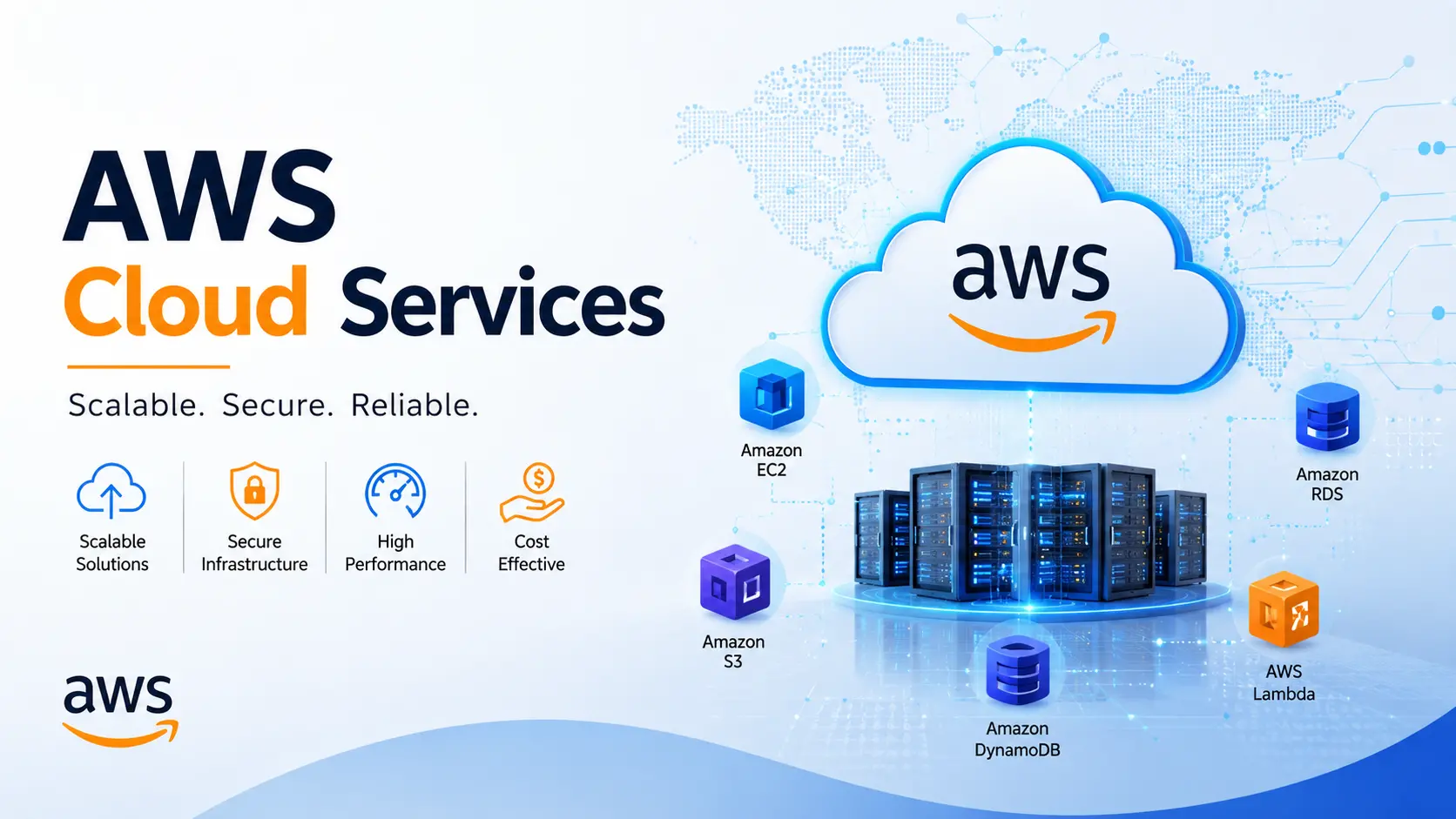
If your website slows down every time traffic spikes, or you're paying for physical servers that sit half-idle most of the month, AWS cloud services solve that problem. Amazon Web Services lets you rent exactly the computing power, storage, and database capacity you need, and scale it up or down as your business changes. Hyper Software plans, migrates, secures, and manages that AWS environment for you, so your team can focus on the business instead of babysitting servers.
AWS cloud services are a set of on-demand computing resources, including servers (EC2), storage (S3), databases (RDS), and networking tools, delivered over the internet by Amazon. Instead of buying and maintaining physical hardware, you rent capacity from AWS data centers and pay only for what you actually use.
Think of it like electricity. You don't build your own power plant to run your office; you plug into the grid and pay for what you draw. AWS works the same way for computing power. It launched in 2006 and now runs over 200 individual services, from basic virtual servers to machine learning tools, out of data centers across the world, including a region in Mumbai for low-latency access from India.
A properAWS engagement is more than "we'll move your files to a server." Here's what we actually deliver:
Get Free Consultation Within Minutes
Lower upfront cost. You stop buying servers outright. AWS runs on pay-as-you-go pricing, so a small business can start with a fraction of the capital that physical infrastructure would demand.
Scales with real demand. If a marketing campaign sends 10x your normal traffic, AWS can scale to meet it automatically, then scale back down once traffic settles. Try doing that with a physical server room.
Global reach in minutes. Need your app to run fast for users in Dubai and Mumbai at the same time? AWS has data centers in both regions, and deploying to a new location takes minutes, not months.
Built-in security infrastructure. AWS invests heavily in physical and network security. That doesn't mean your setup is automatically secure though; misconfigured access controls are still the top cause of cloud breaches, which is exactly why proper setup matters.
No hardware maintenance. No more replacing failed drives at 2 AM. AWS manages the physical infrastructure; your team manages the applications running on it.
Where AWS isn't the right fit: if you run a single low-traffic internal tool with a fixed, predictable load, a basic shared hosting plan might genuinely cost less. We'll tell you that upfront instead of selling you infrastructure you don't need.
There's no single fixed price forAWS cloud services, because your bill depends on usage, not a flat subscription. That said, here's what businesses in India typically see:
|
Business Type |
Typical MonthlyAWS Spend |
Typical One-Time Migration Cost |
|
Small website or blog |
₹2,000 – ₹8,000 |
₹15,000 – ₹50,000 |
|
Growing e-commerce store |
₹10,000 – ₹40,000 |
₹50,000 – ₹2,00,000 |
|
SME business application |
₹25,000 – ₹1,00,000 |
₹2,00,000 – ₹8,00,000 |
|
Enterprise-grade system |
₹1,00,000+ |
₹10,00,000 and above |
These are typical ranges based on common project sizes, not fixed quotes; your exact number depends on data volume, number of applications, and how much re-architecting is needed. Also budget for 18% GST on India-billed AWS accounts, and factor in whether you want a managed support retainer on top of the AWS bill itself, since that's a separate cost from what Amazon charges directly.
Ongoing managed support (monitoring, patching, cost reviews) is usually billed separately from yourAWS usage bill, and typically runs from a modest monthly retainer for a small setup up to a much larger figure for enterprise-grade 24/7 coverage. Ask us for an exact quote once we understand your workload; we don't believe in one-size-fits-all pricing.
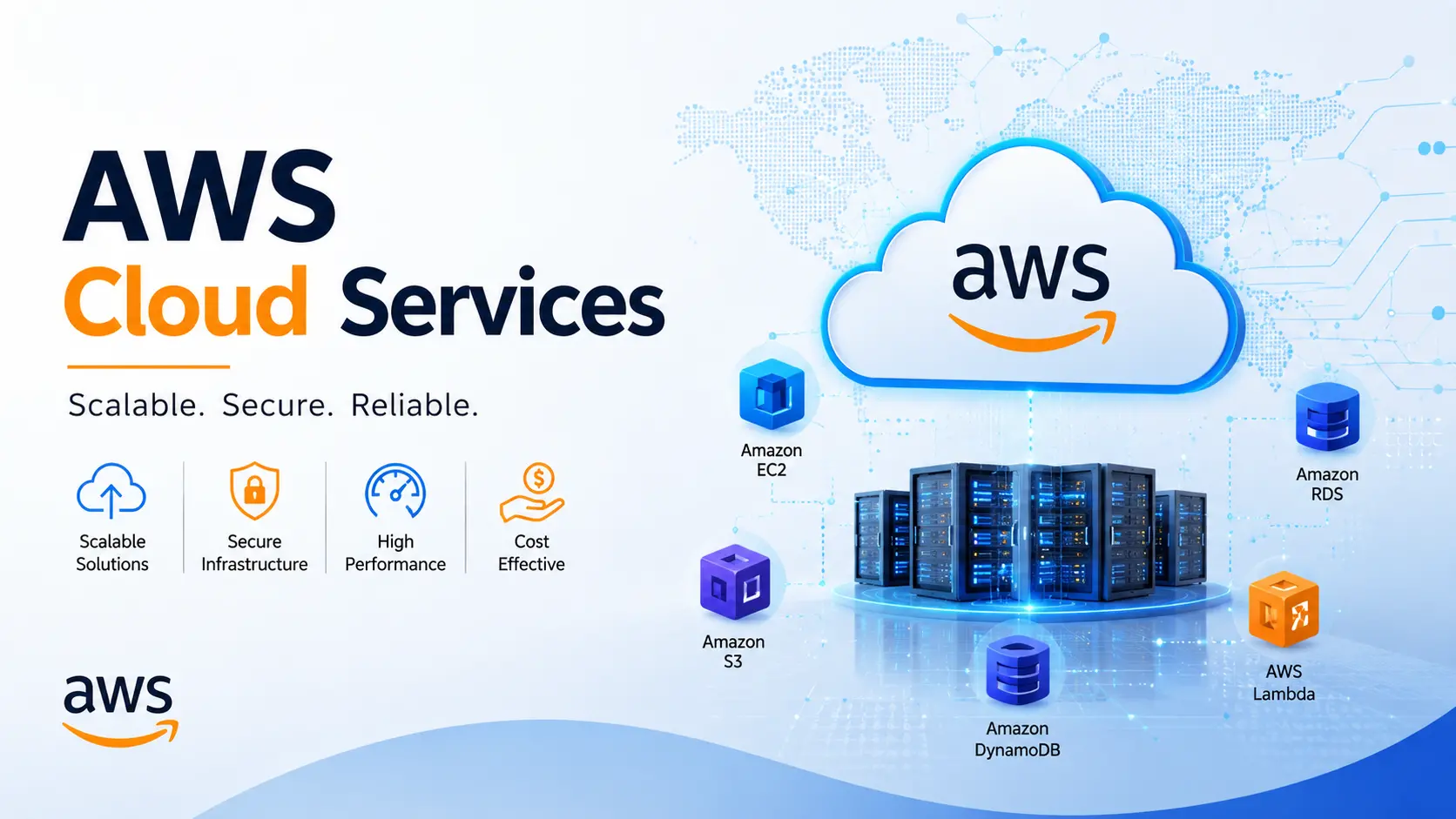
1. Assessment. We audit your current infrastructure, applications, and traffic patterns to understand what needs to move and how.
2. Architecture planning. We design the target AWS environment, deciding on instance types, storage, database structure, and security groups.
3. Pilot migration. We move a low-risk piece first, a staging environment or a single service, to validate the plan before touching production.
4. Full migration. We move the remaining workloads in a scheduled window, using strategies like lift-and-shift for simple apps or re-platforming for ones that benefit
from AWS-native services.
5. Testing and cutover. We test performance, load, and failover before pointing your live traffic to the new environment.
6. Post-migration optimization. We right-size resources, tighten security, and set up monitoring so you're not overpaying or under-protected from day one.
Most small-to-mid migrations complete in 3 to 6 weeks. Complex enterprise migrations with multiple interdependent applications can take several months, and rushing that timeline is usually where things go wrong.
Can you set up AWS yourself? Technically, yes. AWS gives you a free tier and self-service tools. Whether you should is a different question.
|
Factor |
Doing It Yourself |
Hiring an AWS Cloud Services Company |
|
Upfront cost |
Lower on paper |
Includes setup and consulting fees |
|
Time to launch |
Slower, heavy learning curve |
Faster, expert-led |
|
Risk ofmisconfiguration |
High, especially for security and IAM |
Low, follows AWS best practices |
|
Ongoing bill control |
Easy to over-provision and |
Actively optimized and reviewed |
|
overpay |
||
|
Support when something |
You're on your own |
24/7 support included |
|
breaks |
We've seen businesses attempt AWS setup in-house and end up with wide-open S3 buckets, oversized EC2 instances running 24/7 for a workload that only needed a few hours a day, and no cloud backup solutions strategy at all. If your team has genuine AWS certification and bandwidth to spare, DIY can work. If not, the cost of a mistake, whether it's a security breach or a runaway bill, usually outweighs what you saved on DevOps consulting fees.
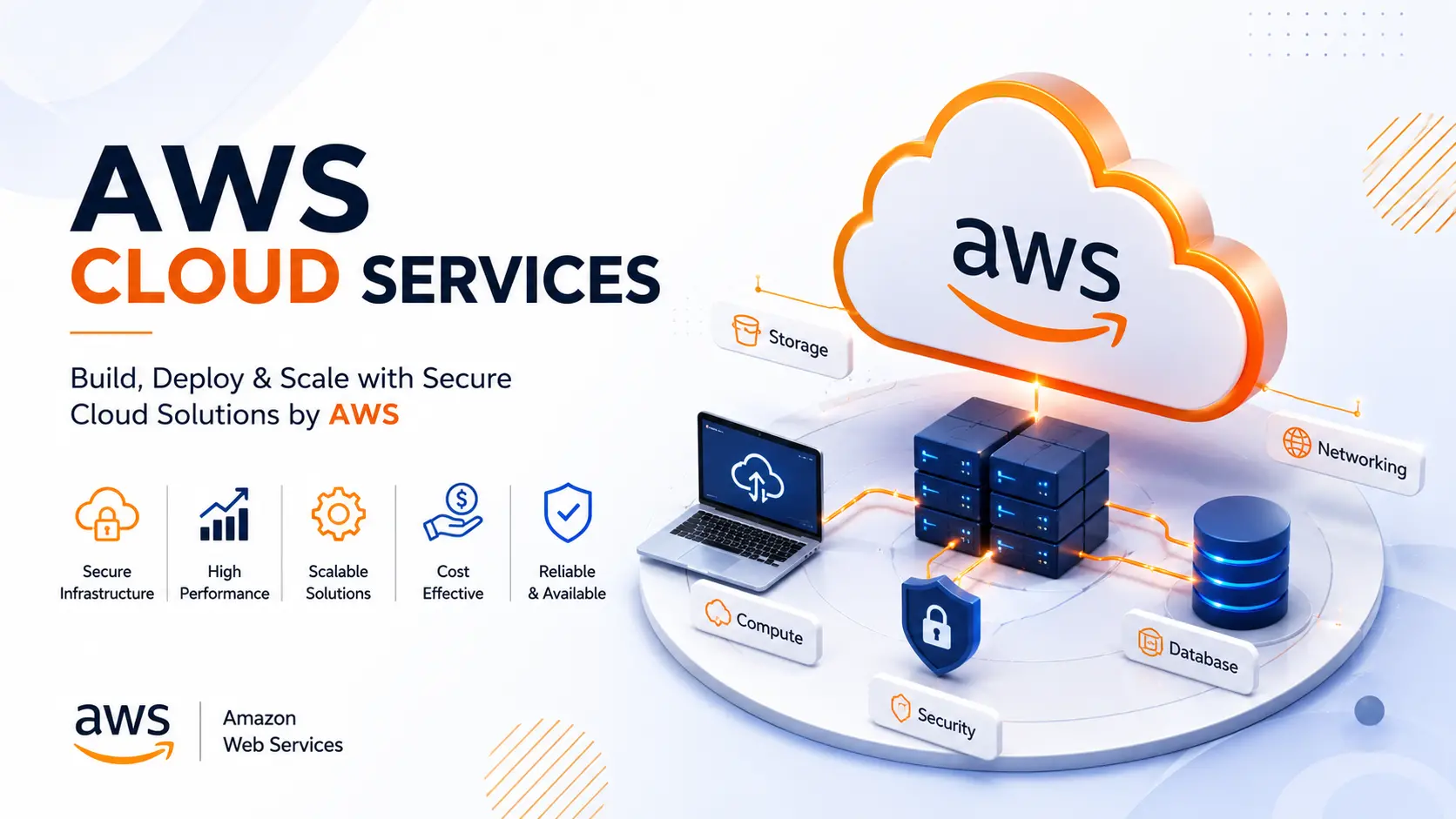
|
Factor |
AWS |
Microsoft Azure |
Google Cloud |
|
Service |
Widest range ofservices |
Strong for Microsoft-heavy |
Strong for data |
|
breadth |
overall |
environments |
analytics and AI |
|
India presence |
Mumbai and Hyderabad regions |
Multiple India regions |
Mumbai and Delhi regions |
|
Best for |
General-purpose workloads, startups to enterprise |
Businesses already on Microsoft licensing |
Data-heavy, analytics-first products |
|
Learning |
Moderate, huge community |
Moderate, easier ifyou |
Steeper for teams |
|
curve |
and documentation |
know Microsoft tools |
new to GCP |
AWS tends to win on sheer service depth and market maturity, which is why it remains the most common starting point for businesses without a strong existing preference.
AWS cloud services are on-demand computing resources, including servers, storage, databases, and networking, provided byAmazon over the internet. You rent capacity instead of buying physical hardware, and pay only for what you use.
Yes. AWS's pay-as-you-go model means small businesses can start with minimal upfront cost and scale up only as they grow, avoiding the large capital expense of physical servers.
It depends entirely on usage. A small website might run ₹2,000–₹8,000 a month, while a growing e-commerce store often falls between ₹10,000–₹40,000. Enterprise workloads can run into lakhs monthly.
Most small-to-mid-sized migrations take 3 to 6 weeks. Larger, multi-application enterprise migrations can take several months, depending on complexity and how much re-architecting is required.
In most cases, yes, if the migration is planned properly with a pilot phase and a tested cutover window. Downtime usually happens when businesses skip testing or rush the go-live process.
Cloud hosting is a broad term for renting server space over the internet. AWS is a specific, extensive provider of cloud services that includes hosting along with databases, security, analytics, and dozens of other tools beyond basic hosting.
It's not legally required, but it significantly lowers the risk of misconfiguration, security gaps, and overspending, especially if your in-house team hasn't managed AWS environments before.
Not inherently. Pricing is comparable across providers for equivalent services, and the "cheapest" option depends on which specific services your workload actually uses.
Your data is copied to the newAWS environment first, verified for completeness, and only then does traffic get switched over. The original data stays untouched until the new environment is confirmed working.
Yes, this is one of AWS's core strengths. Auto-scaling adds server capacity automatically as traffic rises and reduces it again once demand drops, so you're not paying for peak capacity year-round.
A Jaipur-based e-commerce client came to us running their store on a single shared- hosting server. Every festive sale, the site slowed to a crawl or went down entirely, right when they needed it most. We assessed their traffic patterns, moved their store to AWS with an auto-scaling EC2 setup and a managed RDS database, and set up CloudFront to speed up page loads for customers across regions. During their next big sale, traffic tripled compared to the previous year. The site didn't drop once, and their hosting cost actually came down, because they were no longer paying for a fixed server sized for their worst-case load year-round.
E-commerce, healthcare platforms, fintech applications, SaaS products, education portals, and manufacturing businesses running internal ERP or inventory systems. Each industry brings different compliance and uptime needs, and we adjust the AWS architecture accordingly rather than applying a single template to everyone.
Hyper Software has been delivering technology solutions since 2020, from custom software and websites to full cloud infrastructure. We don't outsource yourAWS work to a subcontractor; our own team handles architecture, migration, and support directly, which means one point of contact for the entire project. We work with clients across India and globally, with transparent, workload-based pricing instead of vague packages.
Ready to move to AWS the right way? Call us at +91 9079282750 or reach out through hypersoftware.in to get a free assessment of your current setup.
Yes, AWS has data center regions in Mumbai and Hyderabad, and Indian businesses can get INR billing with GST invoices through authorized partners like Hyper Software.
Managed services typically include 24/7monitoring, security patching, backup management, performance tuning, and monthly cost reviews, on top of whateverAWS itself charges for raw infrastructure.
AWS provides strong physical and network-level security, but safety also depends on how your account is configured. Proper IAM permissions, encryption, and access controls are essential and are not automatic by default.
Misconfigured security settings, such as publicly accessible storage, are the most common and most costly mistake, followed closely by over-provisioned servers that quietly inflate your monthly bill.
Call +91 9079282750 or contact us through hypersoftware.in for a free assessment of your current infrastructure and a workload-based quote.
Have questions or need expert guidance? Our team is ready to help you with the right technology solutions for your business.