
Hyper Software ne hamare business ko online ek nayi pehchan di. Website professional, fast aur SEO optimized hai. Website Design & Development ke liye best company.

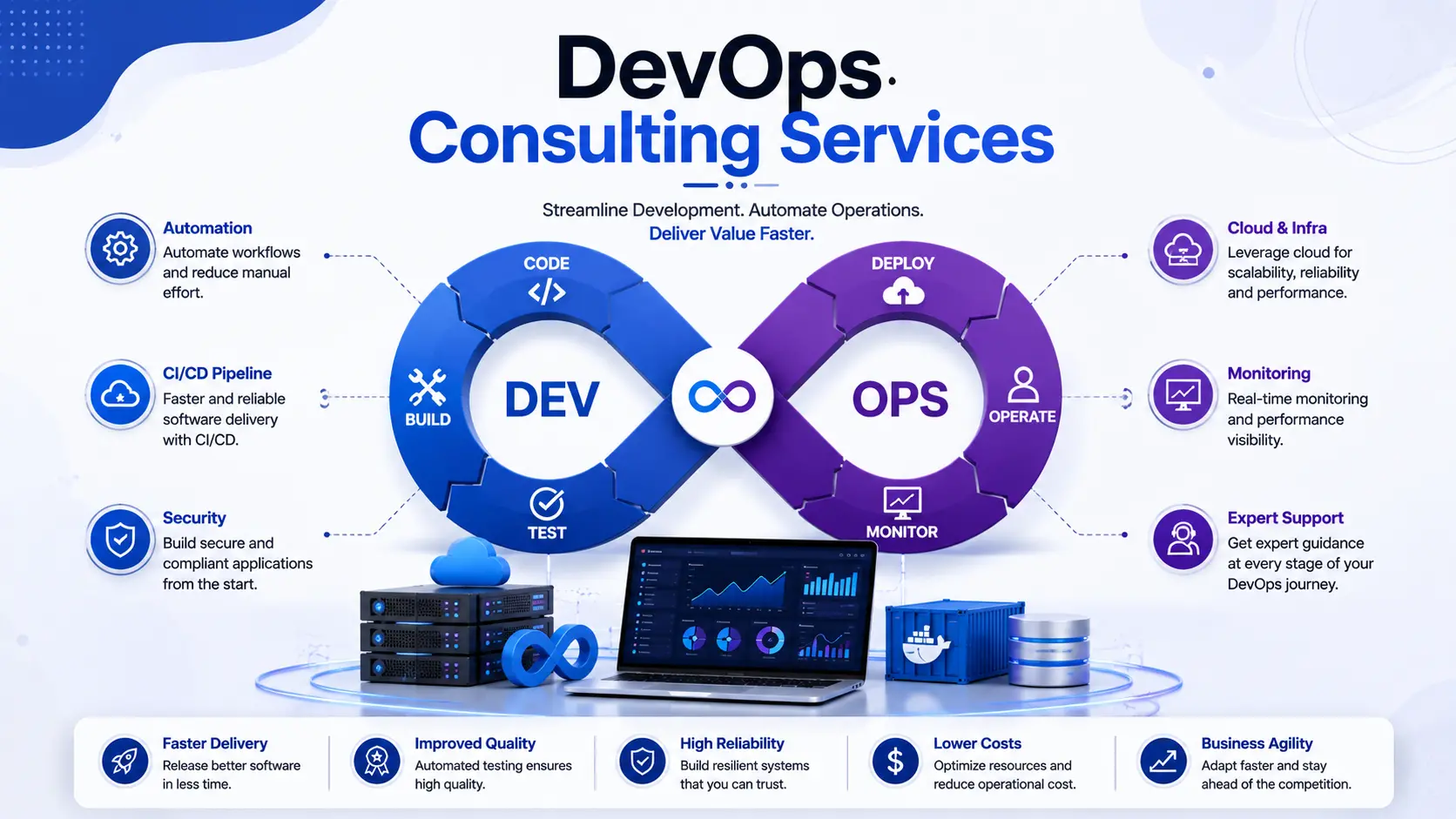
Your team ships code once every few weeks, deployments break something half the time, and nobody's fully sure what's running in production. That's the exact problem DevOps consulting solves. DevOps Research and Assessment (DORA ) consulting means bringing in engineers who audit how your software gets built, tested, and shipped, then fix the parts that are slowing you down or putting you at risk. Hyper Software runs these engagements for clients in the US, UK, Australia, and India, working across AWS, Azure, and Google Cloud.
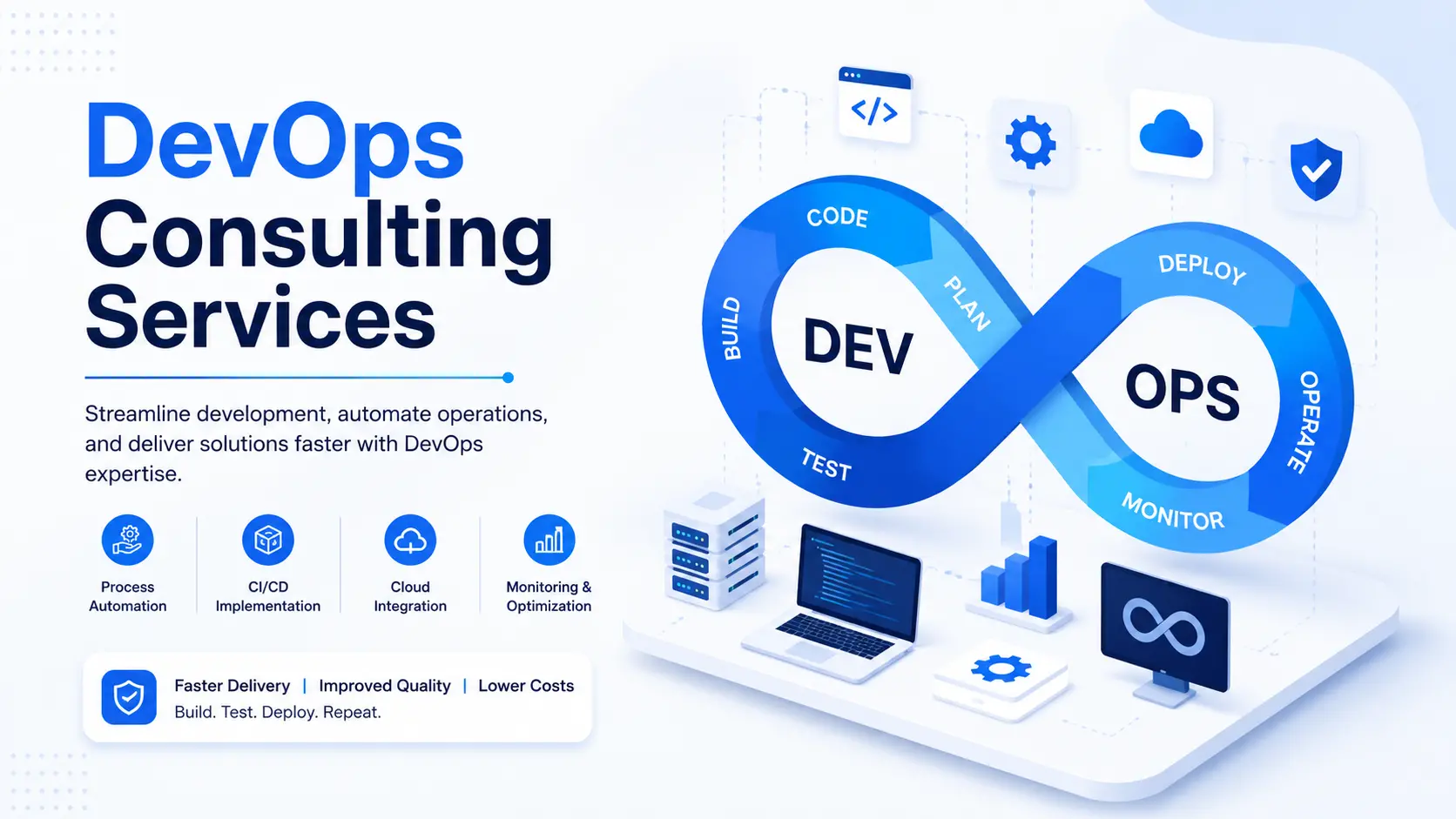
DevOps consulting is not the same as hiring one DevOps engineer. A single engineer fixes what's in front of them. A consulting engagement looks at the whole system — your code pipeline, your cloud setup, your team's workflow, and where things actually break — and builds a plan around it.
Here's the plain-English version: DevOps itself is the practice of getting development and operations teams working from the same playbook, so code moves from a developer's laptop to production without a dozen manual handoffs. A DevOps consultant is the person (or team) who sets that up for you, using tools like Jenkins, GitHub Actions, Terraform, Docker, and Kubernetes.
Most businesses that call us aren't looking for a DevOps philosophy lecture. They want fewer 2 AM outages, faster releases, and a cloud bill that makes sense. That's what the work is actually for.
Get Free Consultation Within Minutes
You probably don't need to think too hard about this one. If two or more of these sound familiar, it's worth a conversation:
None of these are embarrassing. They're just what happens when a product grows faster than the infrastructure supporting it.
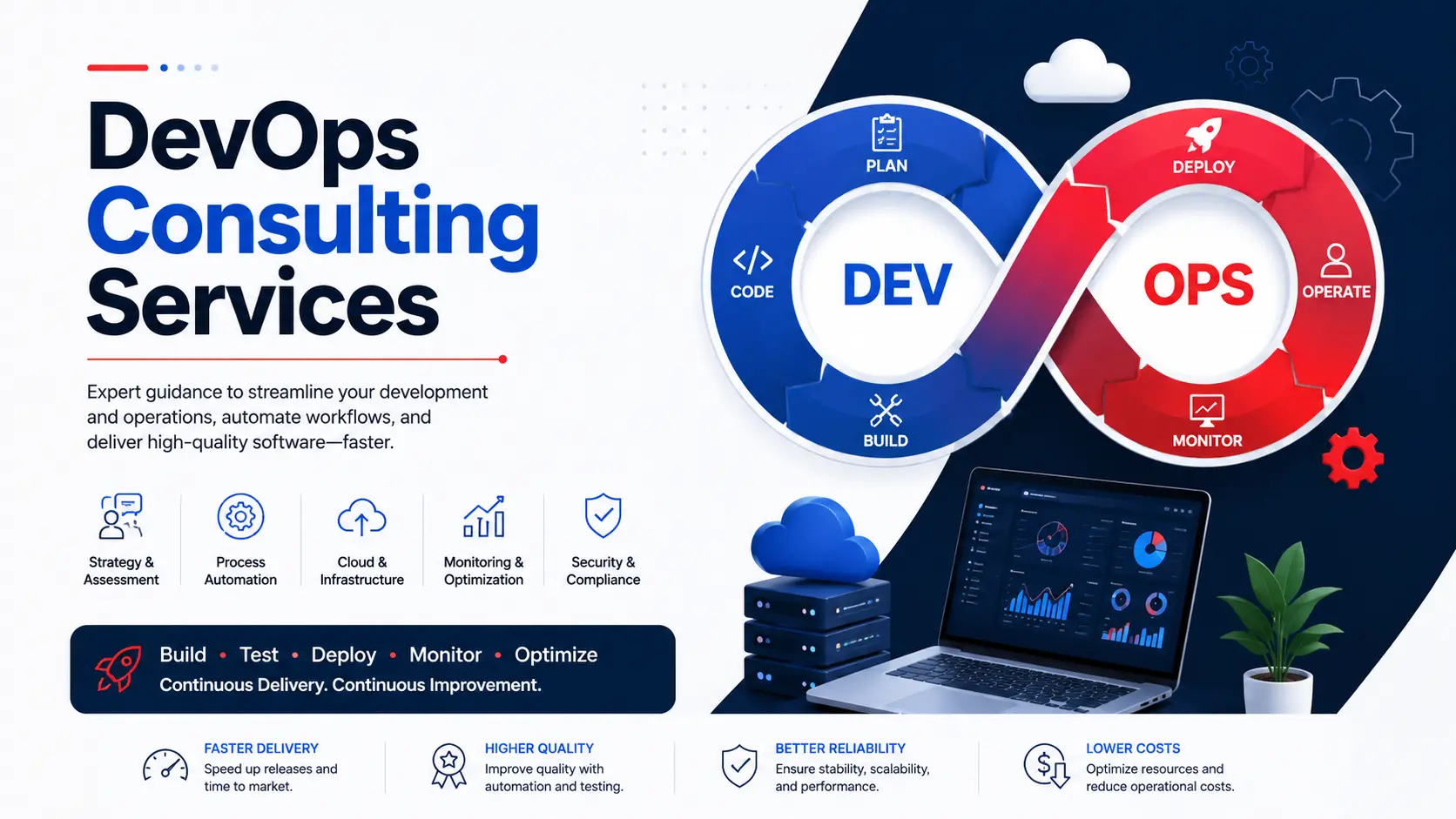
A proper engagement isn't a grab-bag of tools. It usually breaks down into these areas, and which ones apply depends on where your team is starting from.
CI/CD pipeline setup. Automated build, test, and deployment pipelines using GitHub Actions, GitLab CI, Jenkins, orAWS CodePipeline, so every code change gets tested and shipped the same way, every time.
cloud migration services and architecture. Moving workloads to AWS, Azure, or Google Cloud, or fixing an existing setup that's grown messy and expensive over time.
We don't start with a tool recommendation. We start by understanding what's actually breaking.
1. Discovery call. A 30-minute conversation about your current setup, your team size, and what's causing pain right now.
2. Infrastructure and pipeline audit. We review your existing code repositories, deployment process, and cloud environment, and flag the specific risks and
inefficiencies we find.
3. Roadmap and proposal. You get a written plan: what we'd fix first, in what order, with a realistic timeline and cost. No engagement starts without this document.
4. Implementation. We build the pipelines, automate the infrastructure, and set up monitoring, working in your existing repositories rather than a separate sandbox.
5. Handover and ongoing support. We document everything and train your team so you're not locked into us. Ongoing retainer support is optional, not required.
Hyper Software ne hamare business ko online ek nayi pehchan di. Website professional, fast aur SEO optimized hai. Website Design & Development ke liye best company.

Most DevOps consulting pages avoid numbers entirely. Here's what the market actually looks like, based on current 2026 pricing data.
|
Engagement Type |
Typical Range |
Best For |
|
Hourly (India-based |
$25–$60/hr |
Short audits, architecture reviews, proof-of- |
|
team) |
concept work |
|
|
Hourly (US/UK-based |
$125–$300/hr |
Same work, higher cost, similar output |
|
team) |
||
|
Fixed-scope project |
Varies by scope |
A defined outcome, like "migrate to AWS" or |
|
"build our CI/CD pipeline" |
||
|
Monthly retainer |
₹50,000– |
Ongoing support, monitoring, incremental |
|
(light) |
₹4,00,000/month |
improvements |
|
Monthly retainer (full |
₹4,00,000– |
Fully outsourced DevOps operations under |
|
managed) |
₹10,00,000+/month |
an SLA |
A senior DevOps architect who solves your pipeline problem in four hours is cheaper than a junior consultant who takes twenty hours to get to the same place, even if the junior rate looks lower on paper. Ask what's included before comparing hourly rates alone. Hyper Software quotes projects after the audit, not before it, so you're not paying for guesswork.
When DIY makes sense: You're a two- or three-person engineering team, deploying infrequently, and you have someone with real infrastructure experience already on staff. Free tiers of GitHub Actions or a simple Heroku deploy will cover you fine.
When it stops making sense: You're deploying weekly or more, handling customer data, running more than a handful of services, or you've had an outage that cost you real money or trust. At that point, the time your engineers spend fighting infrastructure is time they're not spending on your product — and that's the real cost of doing it alone.
What can go wrong doing it alone: Misconfigured cloud permissions left open to the internet. No rollback plan when a deploy fails. Nobody available at 2 AM when the site goes down. A cloud bill that's 3x higher than it needs to be because nobody's reviewed it since setup. These aren't rare — they're the most common reason companies call a consultant in the first place.
A mid-size e-commerce client came to us after their site went down twice during a single sale weekend. Their deployments were manual, done by one engineer who happened to be on vacation during the second outage, and there was no monitoring beyond customer complaints on social media.
We ran a two-week audit, found the deployment process had no rollback step and their database backups hadn't been tested in over a year. We built an automated CI/CD pipeline with GitHub Actions, moved their infrastructure to Terraform so it was no longer dependent on one person's manual setup, and put Grafana dashboards in front of their team. Their next high-traffic sale ran with zero downtime, and their average deployment time dropped from around 40 minutes of manual work to under 5 minutes, automated
A DevOps consultant audits your current pipeline and infrastructure, then builds and automates the systems that move code from development to production — CI/CD pipelines, cloud infrastructure, monitoring, and security checks.
It depends on deployment frequency and risk. A two-person team deploying occasionally can usually manage without one. A team deploying weekly, handling customer data, or preparing for a funding round's technical due diligence usually benefits.
An audit typically takes one to two weeks. Full implementation of a CI/CD pipeline and infrastructure automation usually takes four to twelve weeks depending on scope.
Yes. A competent consultant works within AWS, Azure, or Google Cloud rather than forcing a migration you don't need.
No. Most engagements work alongside your existing team, transferring knowledge rather than replacing anyone.
DevOps engineer is one person handling day-to-day tasks. Consulting is a structured engagement that audits your whole system and builds a roadmap before any implementation starts.
Most clients see measurable improvement in deployment speed and reliability within four to six weeks of implementation starting.
Only if they're deploying regularly, handling customer data, or have already experienced downtime that cost them money or trust.
Common tools include GitHub Actions, Jenkins, Terraform, Docker, Kubernetes, and monitoring platforms like Grafana and Datadog. The exact stack depends on your existing setup.
Yes — right-sizing infrastructure, removing unused resources, and automating scaling are common outcomes of a DevOps audit.
A quick trade-off worth naming: consulting engagements cost money upfront, and there's a short ramp-up period while the consultant learns your systems. For most teams past the earliest startup stage, that cost is smaller than the cost of a single bad outage.
DevOps consulting is a service where experienced engineers review your software delivery process and set up automation, cloud infrastructure, and monitoring to make releases faster and safer.
Rates from India-based teams typically run $25–$60/hour, while US/UK-based consultants charge $125–$300/hour. Monthly retainers range from roughly ₹50,000 to over ₹10,00,000 depending on scope.
No, though they often overlap. Cloud migration is moving infrastructure to a cloud provider. DevOps consulting covers the broader pipeline, automation, and process around that infrastructure.
A consultant reviews your code repositories, deployment process, cloud environment, and monitoring setup, then documents specific risks and inefficiencies with a proposed fix for each.
Both. You can hire a consultant for a defined project (like building a CI/CD pipeline) or an ongoing monthly retainer for continuous support.
Have questions or need expert guidance? Our team is ready to help you with the right technology solutions for your business.