
Business website bilkul premium quality ki bani hai. Mobile responsive design aur clean layout ki wajah se customer experience bahut achha ho gaya. Highly recommended.

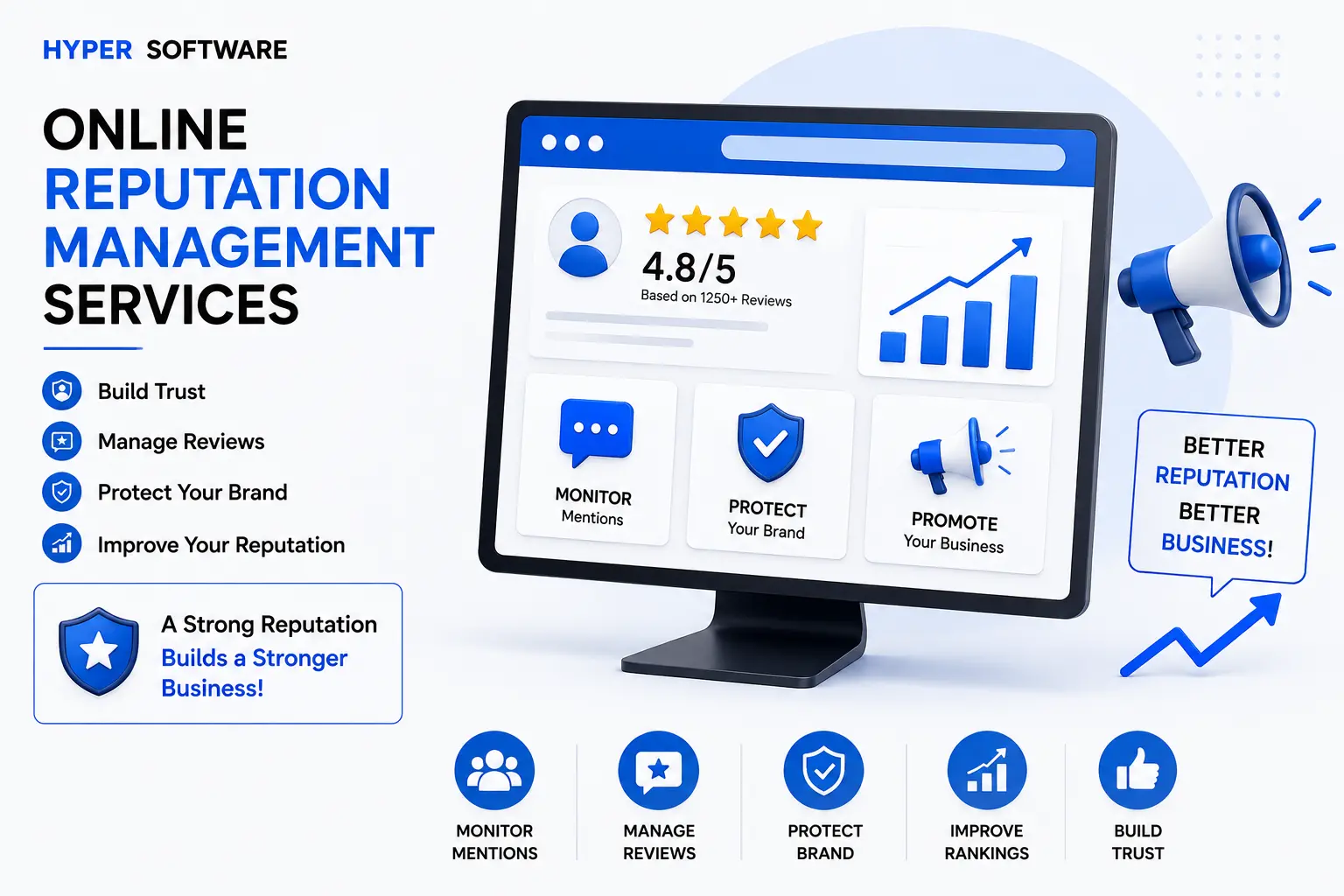
Google your own name or your company's name right now. What comes up on page one is your reputation — whether you built it on purpose or not. Online reputation management is the practice of monitoring, shaping, and protecting that first impression: pushing down what's false or outdated, fixing what's broken, and making sure the real story about you or your business is what people actually find.
At Hyper Software, we've been handling this for clients since 2020, and the short version is this — nobody ever calls us on a good day. Something's already wrong by the time we get the phone call. Our job is to fix it, and then make sure it doesn't happen again.
Online reputation management (ORM) is the ongoing process of tracking what appears when someone searches your name or brand, and actively working to make sure it's accurate, fair, and favorable. It covers four things working together: search result suppression, review management, content creation, and continuous monitoring.
It's not PR. PR gets you coverage. It's not SEO. SEO gets you rankings. ORM uses pieces of both, plus reputation-specific tactics like reverse SEO (building up positive, authoritative pages so they outrank a negative one) and structured review management, to solve a very specific problem: what does the internet say about you right now, and how do you change it?
Here's a distinction most agencies gloss over: you can't delete most negative content. Unless it's defamatory, fake, or violates a platform's policy, that review or article is staying online. What ORM actually does is make it harder to find — burying it on page two or three, where fewer than 1% of searchers ever click.
Get Free Consultation Within Minutes
Ninety-two percent of people check reviews before they buy anything, work with anyone, or hire anyone. That's not a marketing stat — it's just how people behave now. A single bad review or an old news article can cost you a client who never even told you they found it. They just quietly went somewhere else.
It's not only Google anymore, either. Ask ChatGPT or Gemini "is [company] good" and it will summarize whatever it has indexed about you — good or bad. If your reputation online is thin or negative, that's what gets repeated back to the next person who asks. We've started calling this AI reputation exposure, and honestly, most businesses haven't even thought about it yet.
Three groups feel this the hardest:
You probably need help if any of these sound familiar:
If none of these apply yet, good — that's the best time to start, before there's a fire to put out.

We run every ORM engagement through four stages. Nothing gets skipped, and nothing starts without the first one.
Step 1: Reputation Audit
We search your name and brand across Google, Bing, image search, and AI answer engines. We map every negative, neutral, and positive result on page one through three, check your review profiles across every relevant platform, and flag anything defamatory or removable outright.
Step 2: Strategy
Based on the audit, we build a plan specific to your situation. A three-star Google Business Profile needs a different approach than a negative news article ranking #2 for your name. We decide what to suppress, what to remove through direct requests, and what positive assets to build.
Step 3: Execution
This is where the work happens — content creation, authoritative page building, review generation campaigns, social profile optimization, and outreach for direct removals where legally justified. We never use fake reviews, PBNs, or anything that risks a Google penalty. That approach might look fast, but it collapses the moment Google notices, and then you're worse off than when you started.
Step 4: Monitoring
Reputation isn't a one-time fix. We track your search results and review platforms on an ongoing basis, so if something new pops up, we catch it in days, not months.
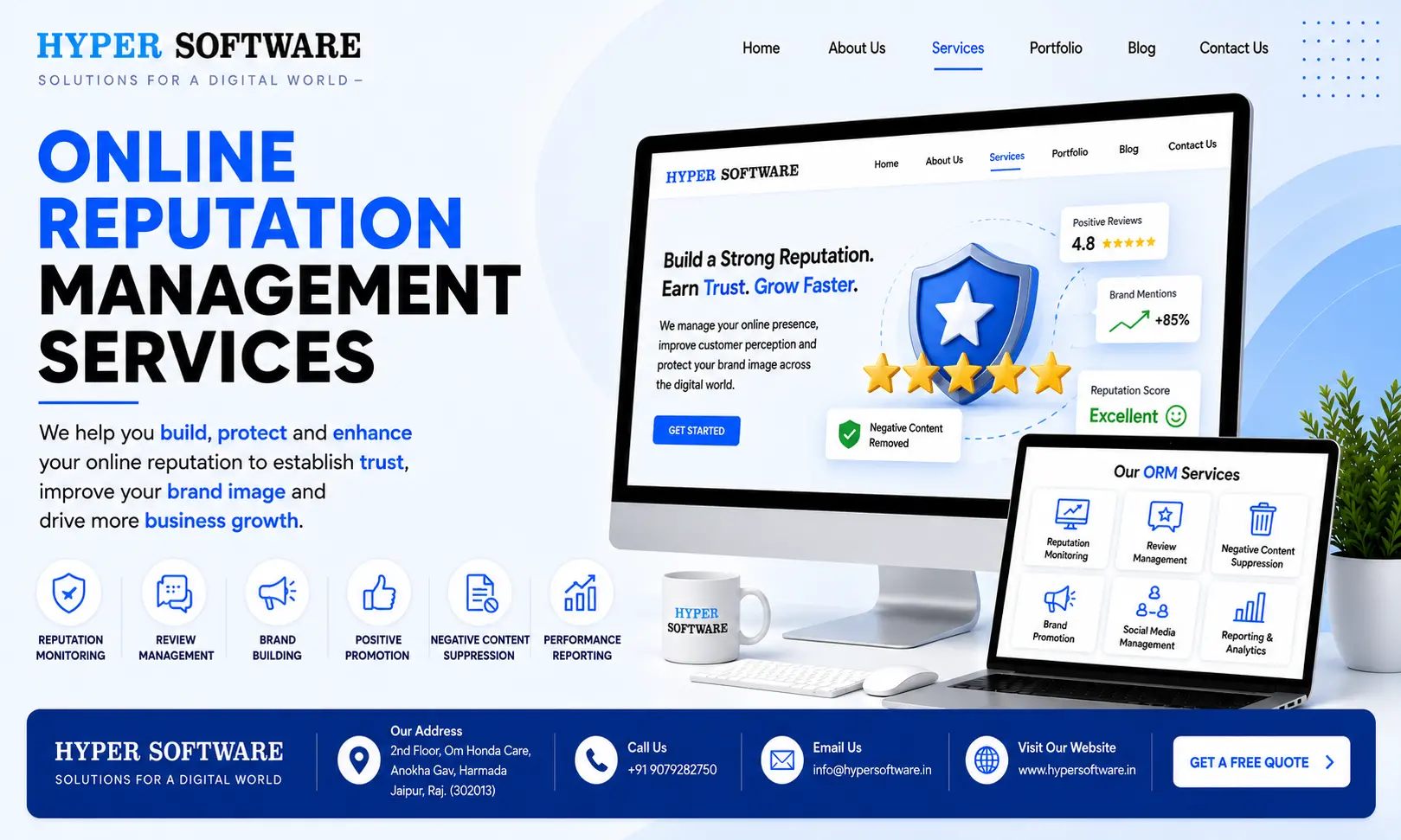
This is the one section most agencies avoid, because it's not always in their interest to tell you the truth here. We'll tell you anyway.
DIY makes sense when:
Hiring an agency makes sense when:
What can go wrong doing it alone: the most common mistake is responding to a negative review defensively, which usually makes it worse and gets screenshotted. The second most common mistake is trying to build "SEO pages" to suppress content using outdated tactics — keyword-stuffed pages, spammy backlinks — that Google now ignores or penalizes. Suppression only works when the new content is genuinely useful and properly built, which is exactly where DIY efforts tend to stall out.
Pricing depends entirely on severity — how much negative content exists, how authoritative the sites hosting it are, and how fast you need results. Here's a realistic range based on what's typical across the industry:
| SituationTypical Monthly Investment | |
| Review Management Only | $150 – $500 per month. Ideal for businesses that need ongoing monitoring, review responses, and reputation maintenance without any active reputation issues. |
| Small Business Reputation Management | $500 – $1,500 per month. Suitable for businesses with one or two negative search results or reviews that need suppression, positive content creation, and review generation. |
| Growing Business Reputation Management | $1,500 – $5,000 per month. Designed for companies managing their reputation across multiple platforms while addressing moderate brand reputation challenges and improving online visibility. |
| Personal Reputation Repair | $1,000 – $7,000 per month. Best for executives, entrepreneurs, doctors, lawyers, public figures, and professionals who want to strengthen their personal online reputation and reduce negative search results. |
| Enterprise Reputation Management | $5,000 – $15,000+ per month. Comprehensive reputation management for large organizations or businesses facing active reputation crises, including crisis response, media monitoring, SEO, PR strategy, and continuous brand protection. |
Direct removal of a single stubborn negative link, where legally possible, can run separately from a monthly retainer, and depends heavily on the site hosting it. Anyone quoting you an exact number before running an audit is guessing. We give you a real number after we've actually looked at your situation — book a free audit and we'll tell you straight where you stand.
Nobody can promise you a date, and you should be skeptical of anyone who does. What we can tell you, based on doing this repeatedly:
Fresh damage moves faster than old damage. A negative article that's a week old is easier to outrank than one that's been sitting on page one, accumulating links and authority, for three years.
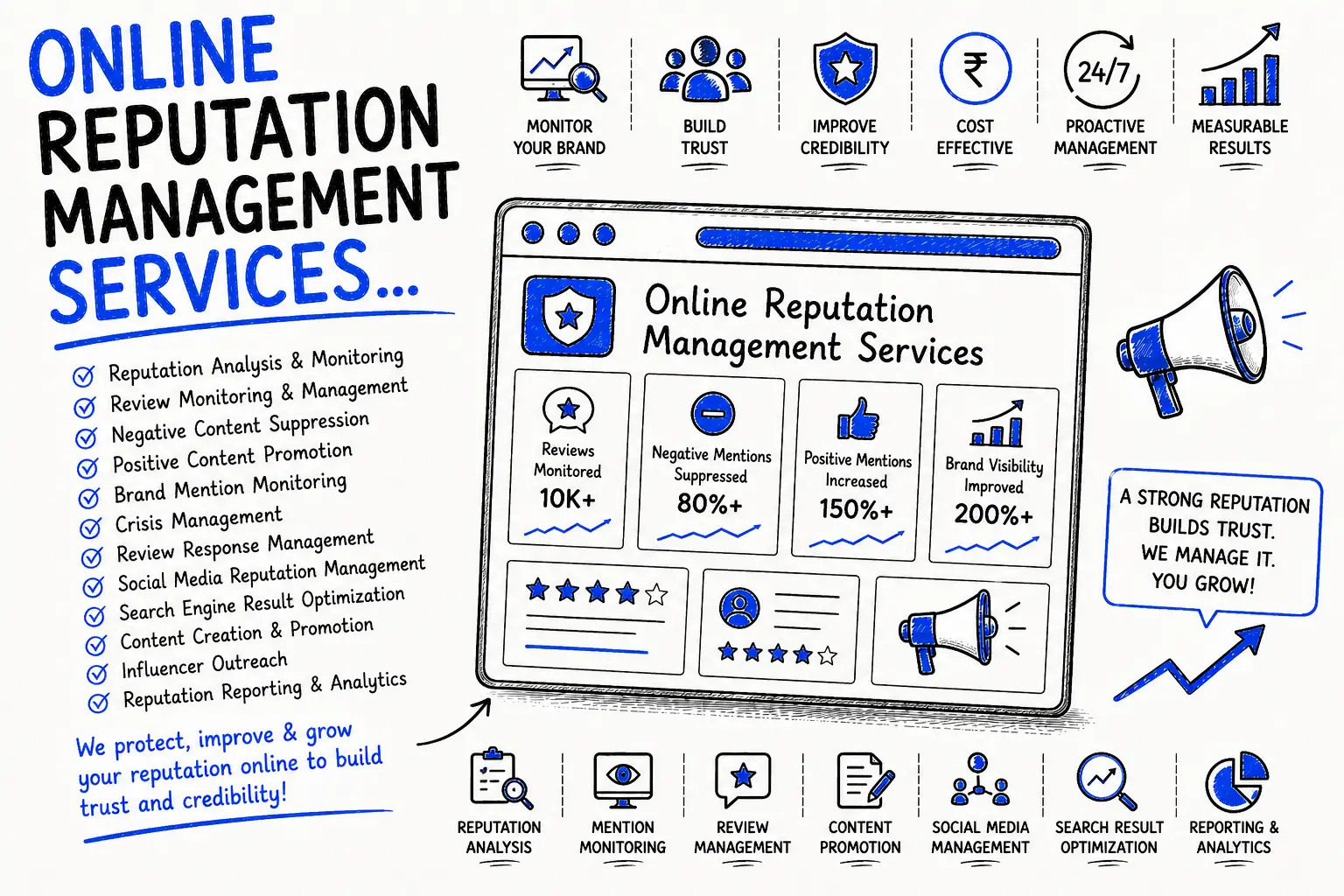
A mid-sized eCommerce client came to us after a disgruntled former employee posted a detailed, damaging blog article about the company that landed at position two for their brand name — right below their own homepage. Sales inquiries had dropped noticeably over six weeks, and the founder had already tried emailing the blog host to request a takedown, with no response.
We ran the audit, confirmed the article didn't violate any removable policy (it was opinion, not defamation, so a legal takedown wasn't realistic), and shifted the entire strategy to suppression. We built out an authoritative "About" page, secured two guest features on industry publications, optimized their Google Business Profile and review flow, and refreshed their LinkedIn presence with founder-authored content.
By month four, the blog post had dropped to position seven. By month six, it was on page two. Search-driven inquiries were back to pre-incident levels, and the client kept us on for ongoing monitoring, because the same former employee tried again with a second post — which we caught and handled within a week, before it ever ranked.
| Individuals | Businesses | |
| Common triggers |
Old news, viral posts, ex-partner content, fake profiles | Negative reviews, competitor attacks, bad press, employee disputes |
| Primary channels | Google search, image search, social media | Google Business Profile, review platforms, news sites, social |
| Typical timeline |
3–9 months depending on content age | 2–6 months for most cases |
| Ongoing need |
Periodic monitoring, especially pre- job-search or pre-launch | Continuous review management and monitoring |
Reverse SEO is the practice of building and optimizing positive, authoritative content so it outranks negative content for the same search term, effectively pushing the negative result further down the page.
Yes, when done with legitimate tactics — content creation, real review generation, and proper SEO. Services that promise instant results using fake reviews or spam links tend to backfire and can trigger platform penalties.
For most small businesses, yes — especially once a negative review or article is actively costing leads. For businesses with no current issues, basic review monitoring is usually enough until a real need arises.
SEO focuses on ranking your own pages higher for relevant search terms. ORM focuses specifically on what appears for your name or brand, using SEO tactics alongside review management, content creation, and monitoring.
Not permanently, but it can hurt significantly while it's visible and unaddressed. With active review management and suppression, most businesses recover their search presence within a few months.
Rarely. Deleted profiles often get replaced by old cached content or third-party mentions that are harder to control. It's usually better to actively manage and optimize your profiles than to delete them.
If searching your own name returns anything outdated, false, or damaging on page one — or if you're job hunting, fundraising, or in a public-facing role — personal reputation management is worth considering.
Only if the article is factually false, defamatory, or was published in violation of a platform's terms. Accurate news coverage, even if unflattering, generally can't be removed and requires a suppression strategy instead.
Google search and Google Business Profile are the priority, followed by industry-specific review sites (like G2, Clutch, or Yelp depending on your industry), social media platforms, and increasingly, AI answer engines like ChatGPT and Gemini.
At minimum, monthly. Businesses in high-review industries or currently managing a reputation issue should monitor weekly, using alerts for new mentions and reviews.
We're not a reputation-only agency running a single playbook on every client. We're a full digital transformation company — websites, software, CRM, ERP, digital marketing, and automation — which means when we build a suppression page or a branded microsite for your ORM campaign, it's built by the same team that builds production websites for clients, not a template farm. That matters more than most agencies admit: a thin, poorly built "reputation page" doesn't rank, and doesn't hold its ranking either.
Founded in 2020 and based in Jaipur, Rajasthan, we work with clients globally and run every ORM engagement with transparent monthly reporting, no fake-review shortcuts, and a real strategist you can actually talk to — not a support ticket queue.
Online reputation management is the process of monitoring, influencing, and controlling what appears when someone searches your name or business online. It combines search suppression, review management, and content creation to keep your search presence accurate and favorable.
Start with a full audit of what currently ranks for your name, then address reviews directly, request removal of anything defamatory or fake, and build authoritative positive content to outrank whatever can't be removed. Most people need professional help once a negative result is already on page one.
Costs typically range from $150 a month for basic review management to $15,000+ a month for enterprise-level crisis management, depending on how much negative content exists and how competitive the space is.
Direct removal, when legally possible, can happen in weeks. Suppressing a result you can't remove usually takes 3–6 months, and severe, long-standing crises can take up to a year.
Yes, if it violates a platform's policy — fake, off- topic, or containing hate speech — you can report it directly. Genuine negative reviews about real experiences generally can't be removed and are better addressed with a thoughtful public response.
Have questions or need expert guidance? Our team is ready to help you with the right technology solutions for your business.